Have you ever looked at a photo or painting and wondered where the focus is? This week, Patti has us concentrating on our subject–the focus of our image. She’s showing us five ways to lead your viewer to the focal point and the reason, you snapped the shutter. I’ve chosen selective focus, negative space and leading line to demonstrate how I help lead my viewers to what caught my eye in the first place.
Leading Lines
I love to use leading lines. They don’t have to be straight as in my photos. Think of a curved road leading to a structure or horizon line. The architects of the Cottage in the California State Empire Mine State Historic Park and the Sundial Bridge made use of the leading line theory. Oh, the bridge does have a working sundial at the end.


Negative Space
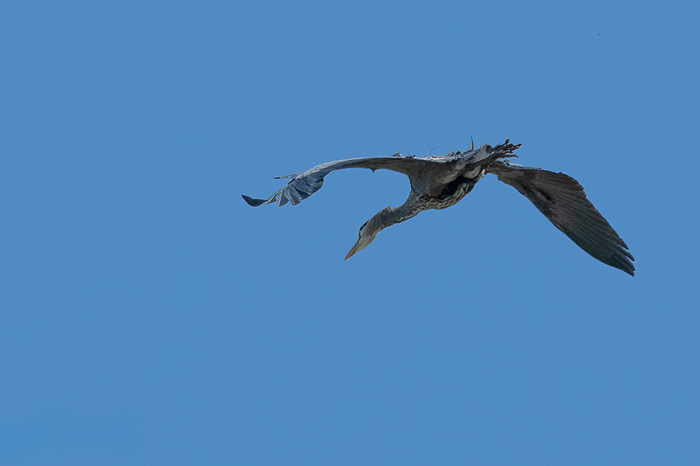
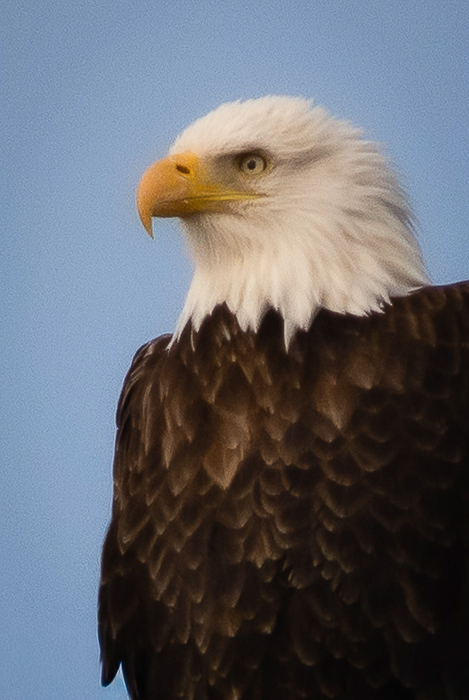
Negative space does spotlight your subject. Most of my examples involve wildlife. Capturing a great blue heron in flight is no easy task with a 300 mm lens, so I’m happy when I can capture one. An eagle sitting on a branch is a bit easier and so majestic. The sky provides beautiful negative space, especially when there’s no clouds!
Selective Focus
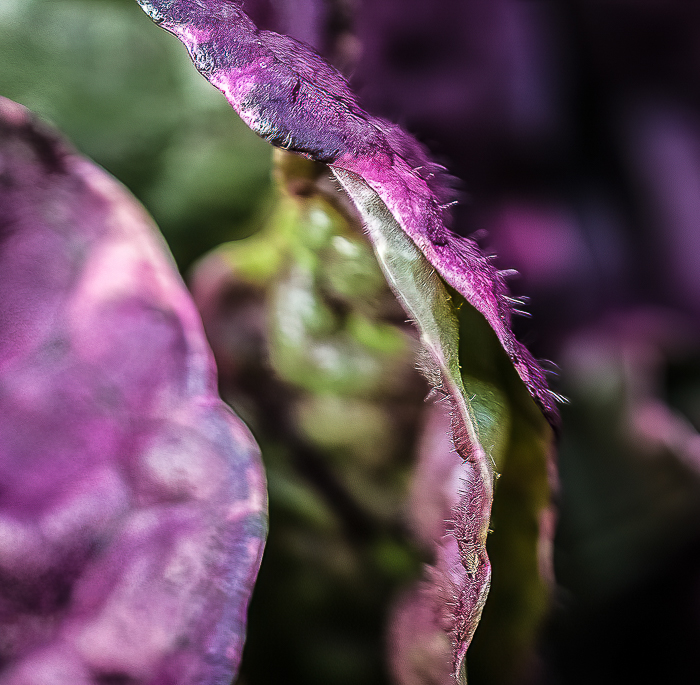
Since I enjoy photographing macros so much, selective focus is a favorite of mine. Using a macro lens to photograph the edges of leaves and their texture is fun. So is going through a farmers’ market where you can zoom in to find vegetables that also have texture.

This was so much fun. Next time I take my camera out for a walk, I’m going to try other types of selective focus. Thanks Patti! When you post your response, please remember to link to her original post and use the Lens-Artists tag. Last week Tina encouraged us to experiment with the Rule of Three. I could tell from your responses you enjoyed creating your posts. Remember to stay healthy and be resilient!


Great shots Anne! I really like the birds, great composition and sharp!
LikeLiked by 1 person
Thanks! I shoot about 50 to get one in focus!! It’s worth it.
LikeLiked by 1 person
Haha thank god for digital huh! Makes that so much easier
LikeLiked by 1 person
Absolutely!
LikeLike
Good examples Anne. I particularly like the nighttime leading line, and purple leaf.
LikeLiked by 1 person
Thanks Brad!
LikeLiked by 1 person
Wow, Anne, I love that evening leading line photo, but that eagle is my favorite!
LikeLiked by 1 person
Thanks John! We always look for the eagles when we visit a wildlife area. Sometimes we get lucky!
LikeLiked by 1 person
I missed that scene at the Empire Mine when we visited, that’s a really cool shot, Anne! Love that bald eagle, love it when they pose so nicely!
LikeLiked by 1 person
Thanks Terri! The water feature is in the back of the cottage. There’s so much to be seen at the mine.
LikeLiked by 1 person
I love using leading lines too Anne, they are a great tool. Great photos for the challenge.
LikeLiked by 1 person
Thanks Leanne!
LikeLike
Excellent examples, Anne, plus accompanying thought processes.
LikeLiked by 1 person
Thanks Tish!
LikeLiked by 1 person
Terrific examples Anne. I love them all but the veggies are so creative!!!
LikeLiked by 1 person
Thanks Tina! I think veggies are so photogenic, especially for macros.
LikeLike
Great examples of the different techniques Anne – I particularly like the selective focus ones 🙂
LikeLiked by 1 person
Thanks Sarah!
LikeLike
Definitely food for thought – something so important and easy to overlook. One thing I learned from a class I took is to consider the vertical and the horizontal – the diagonal is either a vertical or a horizontal depending on vertical or horizontal it is! All add interest to a picture. Nicely done.
LikeLiked by 1 person
Thanks N! Not being artistic, I just go with my gut instincts. That’s why I was surprised to realize I’ve been following rules all along!
LikeLiked by 1 person
You are welcome! I think that these “rules” exist because humans find them intrinsically visual – if that makes sense.
LikeLiked by 1 person
Does that mean since we find the visual appealing, it became a rule???
LikeLiked by 1 person
How about a “norm” – like 5 fingers and toes. 6 of those are not appealing!
LikeLiked by 1 person
Anne, wonderful examples of these three techniques. The heron and the eagle are my favorites.
LikeLiked by 1 person
Thanks Beth!
LikeLiked by 1 person
Masterful, as always, Anne!
LikeLiked by 1 person
Thanks Sandy!
LikeLiked by 1 person
Wow, Anne. I thought the leading lines would be my favourites, as they are so good, but it just kept getting better!
LikeLiked by 1 person
Thanks Sofia!
LikeLiked by 1 person
Anne you nailed this one with these photos.
LikeLiked by 1 person
Thanks Ritva!
LikeLike
This is a great post Anne. Stunning photography 🙂
LikeLiked by 1 person
Thanks Steve!
LikeLiked by 1 person
Excellent gallery Anne. I especially like the Sundial Bridge and I’m jealous of the eagle because I’ve never been able to capture an image of one.
LikeLiked by 1 person
Thanks Paul!
LikeLike
A beautiful gallery Anne, I especially love the way you used negative space when capturing this marvellous eagle ❤️ xxx
LikeLike
Thank you Karina!
LikeLike
Hi Anne
Well, that’s all quite conventional.
Modern art taught us that if we don’t know where to focus, it brings dynamics to a picture. A clear or selective focus makes a picture rigid. That’s okay for documentation but not for more demanding arty images.
The Fab Four of Cley
🙂 🙂 🙂 🙂
LikeLiked by 1 person
I value your opinion, but I don’t quite understand what you are saying. My problem is that I’m not an artist and don’t know much about art. If I like it, I photograph it. How I compose a picture is the same. I move, or move my camera, around until I like the composition. I would never attempt to set up a still life!
LikeLiked by 1 person
We see photography as a kind of art, therefore the difference.
LikeLiked by 1 person
Love that shot of the Sundial Bridge, Anne, and the eagle is fabulous too xx
LikeLiked by 1 person
Thanks Jo!
LikeLiked by 1 person
That illuminated Sundial Bridge is stunning 👏
LikeLiked by 1 person
Thank you Dan!
LikeLiked by 1 person
These are all great pictures, Anne, and the sundial bridge is stunning!!
LikeLiked by 1 person
Hi Anne. I just saw your post in the reader! Wonderful images! The light, color and texture are wonderful. Perfect for the challenge.
LikeLiked by 1 person
Thanks Patti!
LikeLike