Sometimes you just have to ask. Let me explain. Greg, Linda and I were at Sailor Bar, a popular boat launch area on the American River in Sacramento County. We arrived late afternoon to shoot and catch the sunset. Greg, who enjoys meeting and talking with people, was talking with a man who offered Greg a free monopod. Not liking monopods, Greg graciously declined.
I thought, “That’s what I get for not being outgoing and striking up conversations!” They talked some more and again the question about the monopod came up. I then decided to act upon my need for one.
I walked over and said to the gentleman, “Did I hear you offer a free monopod? I could use one.” The guy was happy to go back to his house and bring it back to me. All it needed was a ball head and it was a Manfrotto. Great, I have a Manfrotto ball head on my extra tripod. This monopod, without ball head, is worth $200. What a gift! The sunset wasn’t much, but getting that monopod was something, and all I had to do was ask!
The river scene from the boat ramp.
More from the boat ramp.
Walking along the rocky shoreline.
This goose was thirsty.
He didn’t mind being photographed.
Grasses along the shoreline.
The river as seen from the shore.
It slowly goes behind the horizon.
Not a big display of color, but interesting clouds.
I’ve heard of McKinley Park, but it took 14 years of living in the Sacramento area to visit it. Now I’m wondering why I waited so long. And, it’s funny what brought Marlene and I to visit it–I still can’t wear anything except Birkenstock sandals! Enclosed shoes still hurt the surgery area on my right foot. The park was an easy access walk. However, it had rained the day before and my feet still got wet from the grass.
There are two areas to visit in McKinley park: the rose garden and the pond. I loved the rose garden. Without a macro lens, I did close up shots of the colorful cast in the rose play. The pond offered beautiful scenery and a lot of ducks.
Best of all, McKinley park is relaxing and peaceful. See for yourself. It won’t take another 14 years for me to return.
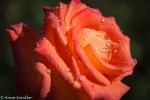
I liked the lighting on this rose.
You can see the remnants of rain on the roses.
I wish I had my macro lens to get closer to that bug, but there was a breeze which would have made macro difficult.
A nice expressive rose.
Getting closer in.
A young rose; not quite fully opened.
Last but not least.
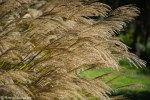
I’m not sure what this is called, maybe pampas grass?
There are inviting arch ways on three sides of the garden.
At the pond, this coot cocked its head the same way my dog does when he’s trying to understand me. Yes, I was talked to it.
It wasn’t supposed to be a journey’s end, but it was. We were going to take a day on our way home, from Sedona, to drive through Sequoia and King’s Canyon National Parks, but I fell on the way to Bakersfield. It’s amazing how people rush to help when you have gray hair! I’m okay–just a couple scrapes, one big bruise and a sore shoulder. With that happening, I decided it would be best to head home.
Yes, I’m disappointed because those National Parks are my favorite. I’ll try to get there in the fall. In the meantime, I want to show you a little of the Out of Africa Wildlife Park. This isn’t like a safari park where you drive through and the animals are walking about. This park is a sanctuary. On this trip, we saw a small animal show, a tiger swim and play show and rode through an area where the animals roamed free. You’ll see from the pictures that these animals are very used to humans, especially the giraffes! The zebras can become a little testy!
Tuzigoot is a National Monument of Native American ruins. When you see the small rooms, you’ll wonder what the Southern Sinagua tribe would think if they saw our large dwellings! We decided not to visit their other dwellings, Montezuma Castle and Well, because we saw them during our last visit.
Caterpillar Point was our last stop on this trip. It was a rocky stream bed, some small water falls and lots of wildflowers including a century cactus bloom.
Take a look at our last two days before we ended our journey and headed home.
The Tuzigoot ruins. Each one of these sections was a family dwelling.
Not only were they on the top of the hill, but on the slight slope.
Here is a stairway.
Looking down on more dwellings.
This little guy still lives here!
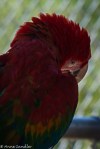
This parrot was part of the small animal show at Out of Africa.
I don’t remember what this one is called, but he sure is cute.
Again, I can’t remember this guy’s name either.
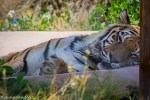
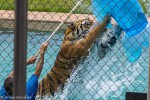
I know this one–a tiger. The park has a pair of siblings. But just one performs in the water show.
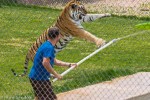
I just couldn’t focus through the fencing to make it disappear.
This is the tiger that loves to play with toys and in the water.
The toys are inflated and held at the end of a long pole. The handlers could pet the tiger, but do have to be careful during play.
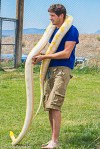
We also attended the snake show. Yes, this is one snake. I had volunteered to enter the grass area where the show was.
Imagine wearing this when you go out for the evening!
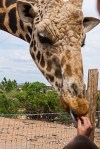
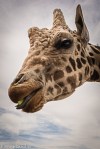
Now we are on safari. They gave us celery to feed the giraffes. They don’t get along so one can’t be in the safari area.
Here one is eating a piece of celery.
The zoologist gives him a cookie.
And gets a kiss in gratitude from the giraffe.
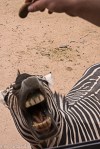
The zebra is anticipating receiving a cookie.
Ope wide! The zebras are not as polite as the giraffes, so we were not allowed to feed them.
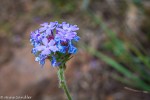
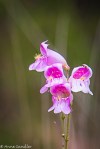
Here are the wildflowers at Caterpillar Point.
The bloom from the Century Cactus. I’ve never seen one in bloom before.
I have a bird book, but not a wildflower book. I think I’m satisfied to enjoy nature’s unamed beauty.
Many of the animals never leave here, so it was like visiting old friends when we photographers made our annual trek to the Suisun Wildlife Rescue Center just outside of Fairfield, California. This was my second trip there through a Meetup organized by the Wildlife and Landscape group. It’s actually a fundraiser for the Center that is run solely through contributions.
This Center is a non-profit volunteer organization, dedicated to the rescue of native California wildlife and to the preservation of the Suisun Marsh, working through the dual avenues of wildlife rescue & release and environmental education. While some animals are able to be released once they are well, many are not. Birds with wing problems, an albino snake, a coyote and many eagles are just some of the wildlife that cannot be released.
But, they do work for their keep. Volunteers take them to schools through an educational program. While they educate, the animals are cared for by an all volunteer staff. And the staff brought out the animals in turns so we could photograph them. While we were shooting, we were told about the animal’s personality, how they were brought into the Center and whether they would ever be released. When you look at the images, in many cases, you can tell why they will remain at the Center.
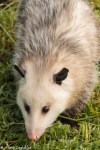
This opossum is a new addition to the Center.
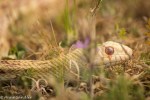
This albino snake will never leave the Center.
It has no way to blend into the background.
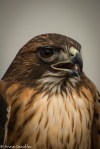
This red tailed hawk was here last year.
There were two being shown. And, yes, they look alike.
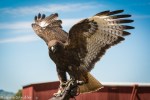
You can see the wing injuries.
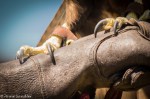
Their talons are still sharp.
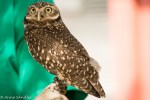
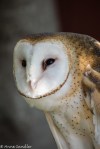
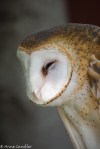
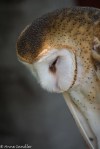
Like this small owl, most birds have wind injuries.
This little owl has only one eye.
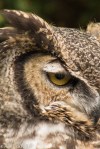
I love the owls eyes. This is one of two Great Horned Owls.
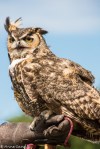
This eye belongs to another Great Horned Owl pictured next.
Dry brittle low lying ground cover with lots of fox tails and some wildflowers welcomed us to our campground at Lake San Antonio this past weekend. Some of it was due to the fact that we were in the overflow area where there were few trees, but the drought has also taken its toll.
But the wildlife activity was normal with many chipmunks and rabbits running the campground. They left small to large sized holes that Gem liked to stick his mussel into and I kept pulling him back. But we were there for the stars and there were plenty of them.
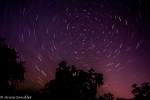
This was my first attempt at shooting star trails. So armed with my printed out tutorials, I set up my tripod and camera and did my best. Thank goodness for Lightroom! No matter what I did, my images turned out with a light tan background. Each night I used a different lens and kept the aperture open. I did 30 minute exposures because I didn’t have stacking software.
I brought my challenge to my Toastmasters Photo Club meeting, it was suggested that I needed to close down the aperture because I was letting in too much light. Well, I’ll try that the next time we go up to the observatory at Blue Canyon. It needs to get a little warmer for my body! In the meantime, I’ll show you what I did get.
I was also shooting during the day, catching some of the wildflowers and fox tails, and I’ll show you those images in my next post. On to my starry nights.
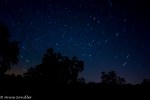
Star trails the first night. Shot: 18 mm, F 3.5, ISO 500, 30 min exposure.
Starry sky. F/3.5, 18 mm, 78 second exposure, ISO 1000.
Shot the second night. F/4.7, 16 mm, 13 minute exposure, ISO 800
Again on the second night. F/5, 13 mm, 56 minute exposure (I forgot to set the timer!) ISO 200.
The last night. Shot with my prime 50 mm. F/2.8, ISO 100. I decided this was not the lens to use so I switched back to my 18-55 mm.
Last shot. I moved the set up away from the North Star and ended up capturing the lights from astronomers who were imaging. The lights are coming from their computers. F/3.6, 18 mm, 30 minute exposure, ISO 100.
I love street photography, but I’d rather it was candid. I know that’s the more difficult way to go, but it tells a better story. Fortunately, it was a weekend and the people were out enjoying the weather and beauty of the UC Davis arboretum. There were families, students, runners, cyclists, and many more. I’ll tell you about each image in the gallery. If I have room, I’ll also put in some odds and ends that I either forgot or didn’t fit into my three categories.
Some street photography!
Woman admiring the Red Bud, taking a cell phone shot.
Woman sketching.
Woman enjoying the serenity along with others relaxing by the creek.
A boy watching the busy ducks.
There were lots of dog walkers.
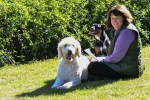
And dog sitters! This woman actually had two dogs, but this poodle was regal.
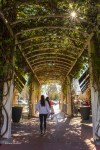
Waliking through the arbor.
A street musican entertained us during lunch.
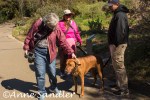
Marlene and Laura stop to talk to a dog owner and pet the dog.
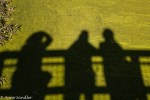
Here we are. From Left, Laura, Me, Marlene. At least I think that’s the order! It was Marlene’s idea for us to do this shot of our shadows.
Romance on the bridge.
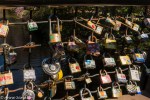
Locks on the bridge.
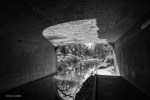
Walking under a cement bridge.
An arch made out of rusted shovels.
A closer look.
At one time or another we have to use the bathroom. This one is tiled on the outside.
When you’re in or near Sacramento, California, you’ve got to visit the UC Davis Arboretum. Laura, Marlene and I walked the approximate 5 – 6 miles around the area, stopping for lunch. Even though I carried my cameras on a two-camera sling and everything else in a photo vest, my back was protesting during the last third of the trip.
The arboretum is a 100 acre park that borders Putah Creek. About 17 gardens have been planted along the creek, giving variety to the eye and much to shoot for photographers. I don’t know whether I’m just getting better at my craft or whether the gardens were beautiful even though it wasn’t spring yet; but, I do have a lot of photos to show you. So I’ll do it in three parts. Tonight I’ll show you the wildlife, next the landscape and finish up with the people.
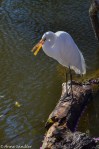
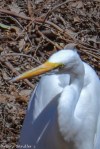
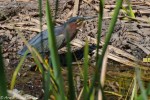
The arboretum wildlife consists of birds, turtles and water fowl. And, they were pleantiful when we were there, especially the egrets. I’ve always seen one or two at the arboretum, but there were more that Sunday. No more words–here are the images.
Two days is barely enough to take in the beauty of Yosemite, but that’s all we had. So we packed as much in as we could.
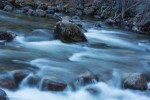
My last lesson here, was that I needed to get a neutral density filter to capture smooth water. I waited until we got to our final destination within the park–Happy Isles to try to get the water as smooth as I could. It was shady there, and there was enough water to work with.
We also went to the Lower Bridalveil Falls and the church. Tired, we left the park before sunset and ate dinner in Manteca. The Thai food was delicious especially since I was tired of eating meatloaf (for lunches and dinner)! Laura dropped me off at about 9:30 p.m., and I went directly to bed. I know she began editing her photos when she got home.
Here are the last images of Yosemite.
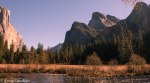
I think this was near Tunnel View.
So pretty!
The river.
Reflections.
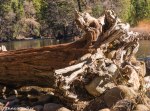
The beauty of a log.
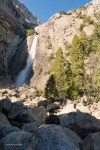
Lower Bridalveil Falls.
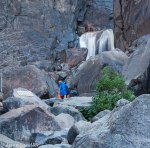
Some people go where they are warned not to go.
It is relaxing to sit and watch the water.
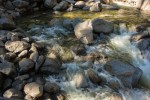
The water flowing over the rocks.
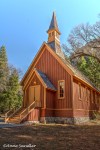
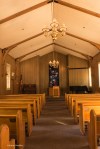
The small church.
Inside the church.
Happy Isles.
Smooth water.
Rocks and debris in the river bed.
I think a neutral density filter would have made this even better.
I tried to smooth out the water going over these rocks.
The drought is now severe in California. Less water in areas means less wildlife. It is dismal here right now. Fortunately, we live in an urban area, and, although we are on water restrictions, we have water. As I said in part one of this post, there were few large birds to be seen during our outing.
But that didn’t stop us from trying to find them. On our way home, we stopped at a wildlife view area off the freeway. Again, no birds, but nice scenery. And, we were able to help a family stranded after they locked their keys in their car. There was a reason for us to pull off the highway.
Then we stopped at the Yolo Bypass Wildlife Area which is just about 25 minutes from my home. We did catch some wildlife there. I think my bird shooting is over for this year. I might go back to Yolo, but I won’t make the 90 mile one way trips again. We are still hopeful for rain, but we’re mostly getting overcast skies and fog.
Here are the images from our stops along the way home.
Photography may be ducky, but most of the wildlife at the Las Gallinas Ponds were ducks! And to go that far, about 90 miles each way, to find mostly ducks wasn’t ducky! At least we found sun, and other things to shoot.
The ponds are next to a water treatment plant, so I was hoping for more wildlife than we saw. I looked at images posted by photographers who went there the day before, and it looked like there were more large birds. I’m thinking it may be the time of day also. We left Sacramento at 8 a.m. and got to the ponds about 10 a.m. But, we walked the trail, met other people and found good stuff to shoot.
I had difficulty shooting the larger birds (mostly gulls) in the air because I’m having a difficult time holding my 300 mm lens still. This is something new for me. I guess it’s back to the gym. I need more upper body strength.
So here are some images. Don’t worry, I won’t burden you with a whole lot of ducks! This will be a two-part post.






































 Slow Shutter Speed