I’m on the move this year, shooting whenever and wherever I can. So, when photo buddy Greg Morris offered to take me up to the foothills and visit the sister cities of Grass Valley and Nevada City, I couldn’t refuse. I had been there and toured the Empire Mine State Park, but when you go with someone who knows the area, it’s a whole new experience.
As a former resident, Greg knows all the stores, buildings, neat homes and the area’s history. Greg shoots mainly on a tripod and takes a good deal of HDR shots. And the results are amazing. I’m going to have to ask him to give me a lesson in Photomatix.
It was fun listening to his stories. I hope you enjoy the images.
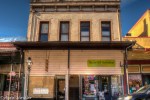
The main street in Grass Valley is colorful and quaint.
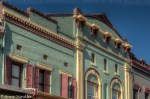
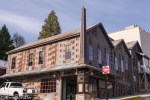
I loved the design and colors of this building above the stores.
This bank is beautiful
Another beautiful upstairs.
Part of the street.
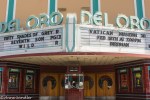
The old movie theater
Look at the old architecture.
And the beautiful doors.
The Nevada City Winery at The Miner’s Foundry Cultural Center.
Be happy–that you are able to get the medical care we have today. Of the three museums we visited, this was the scariest. When you look at what the doctors of years gone by had to work with, thankfulness and fear comes to the surface. The progress we have made is amazing.
Photographing some of the old tools was difficult because of the small quarters, glare and glass cases. Again, I shot tight. As you look at some of the images, be thankful!
This is an iron lung used when a patient had polio.
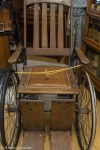
An old wheel chair. Comfy?
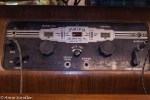
A machine to test hearing loss.
Old medical books.
This was an instrument for medical research only!
This was a diathermy machine, 1920, that electrically produced heat.
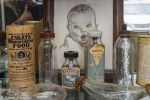
Who remembers asprin packaged like this?
Early baby bottles and a picture of the Gerber baby.
Compounds for mixing.
Medicines.
Microscopes.
A bone saw.
A chloroform mask.
A blood transfusion kit. They would transfer blood directly from one person to another.
You make plans and then need to change them. But, this was a welcome change. It’s raining here in dry California. Although this is a warm storm and will do nothing to help the snow pack, it will help put some water back into the lakes and rivers.
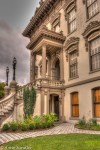
It was a full day of walking, bending and kneeling. Great exercise! In today’s post I’ll show you images from the Stanford Mansion. Unfortunately, they wouldn’t allow us to shoot inside the mansion. It was beautiful, with some of the restored, original furniture like a side board that looked like a locomotive. Leland Stanford was President of the Central Pacific Railroad of California.
Build in 1857, the Stanfords purchased the home in 1861. Over the years the home grew from its original 4,000 sq ft to 19,000 sq ft. After their son’s death 1884, Lealand and Jane endowed the Leland Stanford, Jr. University in 1885. Today that college is a part of the University of California system. It was amazing to go back in time, yet be surrounded by today. The home is tucked in the midst of office buildings.
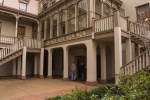
Enjoy the outside of the Stanford Mansion.
The stairs leading up to the front door were beautiful.
Okay, I’m a type A wanna be type B. I took on this 365 challenge and I’m still at it. What do you mean it’s only been a little over a month! It sounds longer at 36 days. And, I’m still shooting on manual.
This is helping me understand the exposure triangle relationship and how to make the image come out the way I want it to. Of course some are shot with my point and shoot, some are of the dog and more will probably be, some are of the grandkids and some are taken on walks.
This challenge has also helped me develop a more keen eye as I look for things to shoot everywhere. I always have my point and shoot with me. Here are some of the less mundane images I’ve captured so far. A few have been on meetups, but most are from everyday life.
This was shot during a Meetup. I think I posted a different version on a blog.
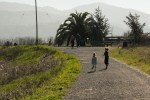
I took this today while walking the dog. I processed it as a single photo in an HDR program and then in Lightroom.
I took this when the younger grandkids were playing with bubbles.
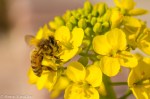
Later I thought I’d crop it in more to see whether the bee was in sharp focus.
During this walk, the bees were active. I posted this image.
This was a try at an abstract using water, oil and food coloring.
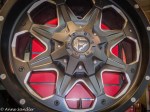
When you’re getting your tires worked on, what do you do? I took a photo!
This one was from a visit to the Sacramento Historical Cemetery. It was a subject of one of my blogs.
This was one of my first attempts to stage a shot.
You may remember this one that was from a photo outing.
This was from a photo outing too.
I was practicing at a creek one afternoon.
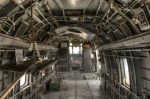
I posted this one also from The Aerospace Museum.
My only other try at staging a photo. I was trying to emphasize the color green.
Walking through a graveyard may not be the ideal place to shoot photos, but the Sacramento Historic City Cemetery is rich with history, unusual grave stones and beautiful flowers. My photo pal, Marlene, and I went there last week and spent some time walking, reading and taking pictures.
It’s not unusual to see photographers out there. I was disappointed that many of the flowers weren’t blooming, but it’s not that time of the year. This just gives me another reason to go back in the spring.
What impressed me was the way they inscribed the tombstones in the 1800s and the type of loss. One family lost two sons at the same age. Having lost a son myself, I could feel their grief more than 100 years later. I found large monuments and small, simple stones.
I’ll go back in the spring and walk the graveyard again. Maybe I’ll go on one of the cemetery tours that take us back into the history of Sacramento. Meanwhile here are my images from this outing.
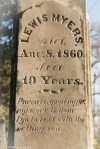
I thought the poem on this stone was beautiful. I’m wondering if the deceased wrote it, knowing he was dying.
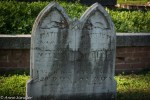
I liked this because of the style of the stone.
This one is older and more ornate.
I was practicing HDR with this masoleume.
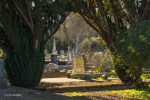
I liked the way these trees formed an entrance to the cluster of graves.
This is the headstone where two sons were lost when they were the same age. Tragic.
This small stone just had JTE on it.
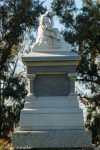
The statues on the stones were especially beautiful.
I liked how ornate this stone was. The sculpting on it is beautiful.
Here’s another statue. The sun is hitting it perfectly.
Thi stone is almost cracked into two pieces. I’m wondering if they will fix it.
Another masoleume. You can see right through the doors. It needs some roof repair. Looks like rust to me. Also an HDR shot.
This family’s graves were lined up.
In the summer when these trees are green, it must be beautiful.
Another simple, small stone. No name, no dates. This makes me wonder about its history.
Here’s a stone shaded by beauty.
Again, just a first name and no dates. It looks more modern.
A fountain, place to sit and shade under the orange trees.
The drought is now severe in California. Less water in areas means less wildlife. It is dismal here right now. Fortunately, we live in an urban area, and, although we are on water restrictions, we have water. As I said in part one of this post, there were few large birds to be seen during our outing.
But that didn’t stop us from trying to find them. On our way home, we stopped at a wildlife view area off the freeway. Again, no birds, but nice scenery. And, we were able to help a family stranded after they locked their keys in their car. There was a reason for us to pull off the highway.
Then we stopped at the Yolo Bypass Wildlife Area which is just about 25 minutes from my home. We did catch some wildlife there. I think my bird shooting is over for this year. I might go back to Yolo, but I won’t make the 90 mile one way trips again. We are still hopeful for rain, but we’re mostly getting overcast skies and fog.
Here are the images from our stops along the way home.
Photography may be ducky, but most of the wildlife at the Las Gallinas Ponds were ducks! And to go that far, about 90 miles each way, to find mostly ducks wasn’t ducky! At least we found sun, and other things to shoot.
The ponds are next to a water treatment plant, so I was hoping for more wildlife than we saw. I looked at images posted by photographers who went there the day before, and it looked like there were more large birds. I’m thinking it may be the time of day also. We left Sacramento at 8 a.m. and got to the ponds about 10 a.m. But, we walked the trail, met other people and found good stuff to shoot.
I had difficulty shooting the larger birds (mostly gulls) in the air because I’m having a difficult time holding my 300 mm lens still. This is something new for me. I guess it’s back to the gym. I need more upper body strength.
So here are some images. Don’t worry, I won’t burden you with a whole lot of ducks! This will be a two-part post.
In addition to Mother Nature, sometimes WordPress makes things tough. I think some of you may have received all the images for both parts of this post and some I didn’t intend to post. I truly don’t know how that happened. However, I don’t know that all of you did. So I’m going to do the last part of this blog post anyway.
We are still fogged in during the morning and early afternoons here in Sacramento, and photographing is still difficult. Difficult unless you want to shoot foggy images. But, we’re trying to shoot wildlife!
And, here’s some more (or once again) some wildlife!
Sometimes photography can be a challenge, especially in fog and overcast skies with only a 300 mm lens! That’s what we were shooting in when we went up north to the wildlife areas to catch the birds in action. Not only was the weather bad, but there wasn’t much water and the bird population was way down.
Usually at the Sacramento National Wildlife Refuge, you can see a few bald eagles. We didn’t see one! One photographer in the meetup did capture one and his image was great. I’m thinking that he was using a longer lens. It was very disappointing.
Further west, the Gray Lodge Wildlife area was not much better. There were enough birds for the hunters to shoot, but not the numbers we normally see. But we did have fun.
When you travel to these meetups with other photographers, they don’t mind stopping and shooting something ineresting that may have nothing to do with your original purpose. We made a couple of those side trips–three of us in the car. Plus we had the extra joy of having the GPS get us lost.
All in all, it was a fun 12-hour day. I hope you like these fogged and overcast images! This will be a two-part post.
Wow, that’s a heafty title! But, that’s what it was. We gathered at the Aerospace Museum for a workshop sponsored by the Sacramento Photographers Facebook group given by Pedro Marenco. We covered topics including HDR, DOF, Focus Stacking and more. (Did you like how I threw out those acronymns!)
Except for the dismal weather, it was fun. My big take away was how much I already know. I keep berating myself about the technical aspect of photography, but I have learned quite a bit. And when there’s math involved, I can get around it. I’m much more confident now.
Most of the images I’m going to show you are HDR. High Dynamic Range explained simply takes three or more shots taken at different exposures of the same image. These different exposures are then brought into a software program that compresses the shots into one image. This eliminates the washed out skies, dark areas, etc. Most HDR programs have presets that can create all sorts of looks. It’s really fun. These old planes are perfectly suited for this.
I also realized that I need to be inspired about what I’m photographing. Although this is an interesting museum, it’s not what I would abosultely go out of my way to shoot. Once we got outside photography got a litlle more interesting. Oh, Richard is totally into planes and docents at this very museum!



































 Slow Shutter Speed