They say that practice makes perfect, Well, I’ve been practicing every day even if it is only for the 365 challenge. It has helped, but I’m far from perfect! But then, who is perfect?
I like to go to Dry Creek because it is so close to my home and is beautiful. I’ve practiced with my ND filter, macro lens, 50 mm lens and just to shoot. The last time, I went with Richard and Gem. The boys walked while I went down to the water to shoot. In the summer, the area is a great swimming hole for children, and it’s harder to shoot.
In this post, I’m going to show you how beautiful this creek is. However, with the drought, the water level is really low. I’m not sure how the creek will hold up during the summer. Let’s hope we get some rain this fall and winter. After all I will still be practicing!
You can see how shallow the creek is.
This beach is perfect for family play. However a couple of years ago, it was much smaller.
I loved the way these roots are flowing on top of the sand.
This caterpillar is not your ordinary green variety.
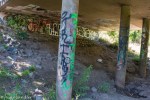
Walking under the highway bridge, you see graffiti.
It goes from one side to the other.
Here’s a closer look.
Dry Creek runs from Sacramento through Roseville.
This sun exposed side is not as lush.
But here on the Roseville side, shade creates a beautiful scene.
I took this picture to show you how large the leaves are, but it doesn’t do it justice.
Flowers also bloom at the creek.
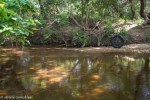
The sun shinning through the trees create a great water reflection.
Politics, I really don’t want to get into that subject, but I am showing you images from a Civil War Re-enactment. So, indulge me with one question: Why has it taken so long to gain equality since that epic war? Okay, two questions: Are we there yet?
Last post’s commentary was regarding the Union camp Marlene and I just happened to walk into because it was closer. The Confederate camp was a little down the road, and the Gibson Ranch pasture land between them was reserved for the battle. I was amazed at how few participants the Confederates had. There were about 1/3 of the tents than in the opposition camp. One of our photographer’s husband was wearing a Confederate cap and was asked to join in the battle against the Union. They lent him a uniform and off he went on his adventure.
Of course, his adventure was the battle of Appomattox Court House , fought on the morning of April 9, 1865. It was one of the last battles of the Civil War and a Union victory. I was wondering how they would re-enact the scene. We did see gun fire (not real bullets) and men (and women in this case) fall to the ground. Soldiers came in on horse back, guns blazing. However they were at the other end of the pasture, and my 300 mm lens couldn’t capture the shot with pinpoint focus. It wasn’t until the battle came closer that I was able to get good shots (with my camera). All in all, they did a pretty good job of presenting a production of this battle.
You can see for yourself in this second post that contains shots of the battle and the Confederate encampment. All politics aside, it was a fun and educational day.
When we got to the Confederate side, they were already getting ready for battle.
They didn’t have the standard confederate uniforms.
And they didn’t look as “military” as the Union.
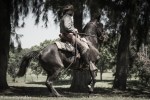
Their horseman were ready too.
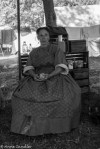
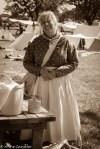
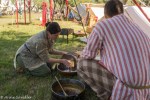
This is the laundress and cook. She needed to take a breather, feeding the entire camp.
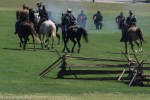
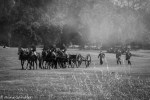
Here the horseman got close enough for me to capture their part of the battle.
Walking to battle.
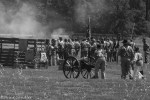
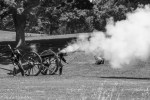
The Confederate cannon. They had this one in the open and two more behind trees.
They don’t fight battles this way any longer. No more standing in lines to get shot.
The Union army is getting closer to the Confederate side.
The Confederates bring their cannon closer to the front line.
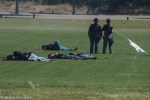
The dead lay on the field. The white flag is not a sign of surrender, it’s a signal flag.
The Union cannon is coming.
The Union fires its cannon.
The Union has basically won the battle.
The Union acknowledges the Confederacy as they surrender.
It was one of the most brutal wars, and one fought on our soil–the Civil War, north against south and sometimes brother against brother. It was something to enter a time warp and see the encampments as they may have been during the civil war. I felt immersed in the culture and people. But, it was a re-enactment at Gibson Ranch. That is the very same ranch that we photographers visit to shoot horses, ducks, and a sunset.
Marlene and I first visited the Union camp just because they were near the parking lot. Except for a few cars, portable toilets and large trash bins, we walked back in time. As much as I appreciated the effort to keep things as realistic to the time period, it was tough to photograph because of all the modern day stuff visible. But it was just a challenge.
This will be another two part post. Today I’ll focus on the Union encampment and tomorrow the confederate encampment and the battle.
Here’s what it was like pre-battle in one of our bloodiest wars.
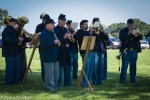
The Company band. We were told that they were killed first because the music they played were battle cues.
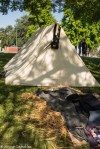
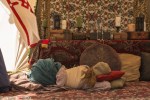
One soldiers tent. I processed black and white where I thought it fit.
Two young girls walking around the camp in period costume.
We talked to this young woman who was in charge of what would probably be a platoon.
Here’s her desk.
A Company does drill.
This gent was at the saloon.
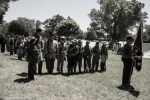
Taking time to talk before the battle.
The grounds.
A better view of the tents. Not like today’s tents.
A Company cook talks with an officer.
The cook. Each Company had their own cook and they did cook at the encampment. No going out for a meal.
A soldier who preferred to sleep outside the tent.
A young boy gets bored while waiting with his mom.
Here’s out cook again. Notice the flag is authentic.
Athletes who train, bands that practice, dancers who start at an early age–they were all there and from different countries. I didn’t realize how big time these games are. Children came from Ireland to compete in what I call the “Drum Major” competition. I’ve tried to find the correct name, but was unsuccessful. Who knows, I might be right! But they were there at the Scottish Highland Games.
I was impressed about how precise everything was. Uniforms had to be just so, routines had to be exact and the throw length in the games was measured. It was pure talent. So take a look at these people of all ages who trained and practiced. I hope you will take the time to view more than the normal amount of images.
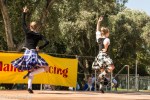
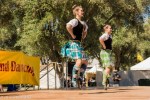
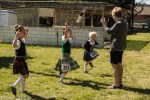
Young girls compete in the Highland Dance Competition. We missed the younger set competition.
Older girls compete.
On this raised dance floor they are able to get off the floor.
Here, little ones practice.
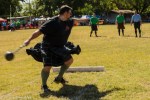
Here a contestant is working up enough velocity to through the weight.
Here the weight is in the air, ready to land and be measured.
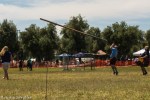
This is the Caber Toss. The tapered pole is 19.5 ft. and weighs 175 lbs.
The contestant runs with the pole and then throws it in the air.
Here you see it coming down. Many of these contestants were seniors!
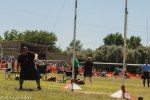
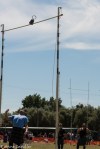
This is the weight over the bar game. This time the goal is to get this 64 pound weight, with an attached handle, over the bar.
This weight is already over the bar and on it’s way down.
You can see a weight clear the bar in this image. Different contestant.
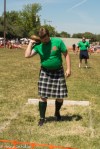
This contestant is getting ready for the stone put.
It is similar to the shot put in the Olympic Games.
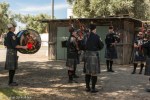
Cal Fire band practices before the competition.
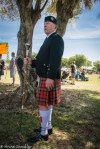
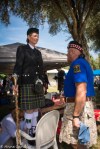
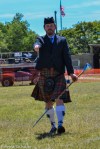
This gentleman stands tall while waiting for his competition.
Photography has pushed me to experience events that I would otherwise ignore–like The Scottish Highland Games in Woodland California. Too bad it took me so long to enjoy this festival because it was fun!
I went with photo buddies Marlene, Greg and Linda and got there shortly after they opened the gates. This was the festival’s second day, but there were still crowds. When we walked in the action was gearing up–athletes, dancers and bands were practicing.
Once they started, the field was bustling with activity. At least three activities at once were being judged. Off the field, contestants were getting ready for inspection, vendors were selling food, crafters were selling their wares and participants were in their camps.
This fair, presented by The Caledonian Club of Sacramento, is an all-volunteer effort enhanced through various sponsorships. I was amazed at how the participants immersed themselves into character, giving visitors a glimpse of what life was like back in the day.
In this post, I’ll focus on people who made the visit so worthwhile for me. I’m so glad photography brought me here.
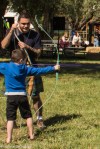
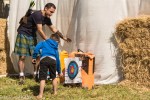
A young archer practices.
Pulling his arrows out of the target.
Washing dishes without the sink.
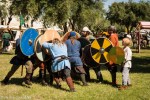
A fight begins.
Let’s take a picture. Wait did they have cameras back then?
It’s not big as far as zoos go, but that’s the beauty of it. You can get around the Sacramento Zoo in about 2 hours–more if you have children with you. You know kids like to snack and play at the playground.
Marlene and I went to the zoo to shoot (gently with a camera) the animals. I had taken the grandkids there a few weeks before and discovered you’re either a grandparent or photographer! However, we were surprised by the bus loads of school kids there on a Thursday morning. It made shooting a little more difficult, but it was fun to watch the children as they reacted to the animals.
So we walked, talked and shot the zoo’s inhabitants. It may be small, but it’s mighty.
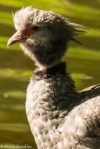
This bird has a strange neck. Sort of cute.
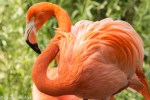
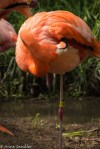
I had fun shooting the flamingos.
This is classic flamingo.
Shh. Someone’s sleeping.
Got an itch? It takes a long neck to scratch it!
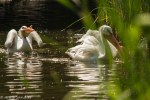
The pelicans are asking for food.
But, we’re encouraged not to feed them.
We had to make noise to wake this lion up.
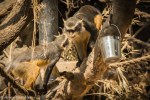
Monkeys choosing who will eat first.
The winner.
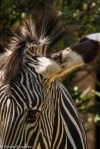
The zebra was hungry and photogenic.
I loved the hair tuft.
I couldn’t zoom in enough to get rid of the cage, but just look at this bird’s eye. How colorful.
This bird has an unusual head. The cage is partially gone.
An anteater.
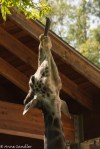
This giraffe was trying to get a leaf from the tree. He needs a longer tongue.
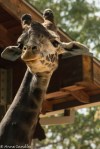
Is he embarrassed?
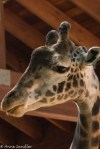
Maybe, but he’s beautiful.
A red panda.
We finally got him to stand up.
A snow leopard.
Gorilla.
When we arrived at the orangutan enclosure, they were all inside. Finally this one came out with a tarp.
He played with the tarp for a few minutes and then went back in.
The wildest animals of all: Left, Marlene and Right, Anne
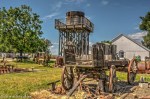
The best things are the ones you don’t expect. And, I didn’t expect Rush Ranch to be so beautiful and fun to shoot. We went there after we visited the Suisun Wildlife Rescue Center. Photo buddy Laura suggested this and Marlene and I were agreeable. Oh, did we have fun, and we didn’t even take any of the nature paths. We stayed and shot old equipment, etc.
Rush Ranch is a working ranch, with cattle and sheep grazing under a wildlife habitat management program. Prior to its purchase by the Solano County Farmlands and Open Space Foundation in 1988, this ranch was owned by the Rushes (a pioneer family).
Now it is open to the public with three hiking trails that take you through different ecosystems. These are the trails we didn’t have time to walk. So we need to go back. Who knows what we’ll see, especially when we don’t expect to.
Meanwhile, enjoy these images from the immediate property.
One of the barns. This was first as we came on the property.
Many of the animals never leave here, so it was like visiting old friends when we photographers made our annual trek to the Suisun Wildlife Rescue Center just outside of Fairfield, California. This was my second trip there through a Meetup organized by the Wildlife and Landscape group. It’s actually a fundraiser for the Center that is run solely through contributions.
This Center is a non-profit volunteer organization, dedicated to the rescue of native California wildlife and to the preservation of the Suisun Marsh, working through the dual avenues of wildlife rescue & release and environmental education. While some animals are able to be released once they are well, many are not. Birds with wing problems, an albino snake, a coyote and many eagles are just some of the wildlife that cannot be released.
But, they do work for their keep. Volunteers take them to schools through an educational program. While they educate, the animals are cared for by an all volunteer staff. And the staff brought out the animals in turns so we could photograph them. While we were shooting, we were told about the animal’s personality, how they were brought into the Center and whether they would ever be released. When you look at the images, in many cases, you can tell why they will remain at the Center.
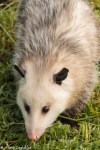
This opossum is a new addition to the Center.
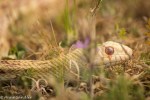
This albino snake will never leave the Center.
It has no way to blend into the background.
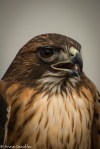
This red tailed hawk was here last year.
There were two being shown. And, yes, they look alike.
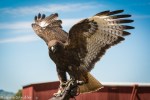
You can see the wing injuries.
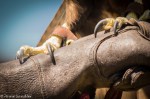
Their talons are still sharp.
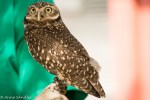
Like this small owl, most birds have wind injuries.
This little owl has only one eye.
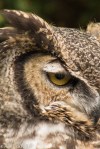
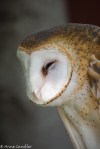
I love the owls eyes. This is one of two Great Horned Owls.
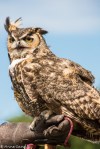
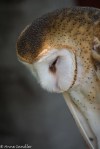
This eye belongs to another Great Horned Owl pictured next.
Mustard! It’s yellow just like the condiment, but you don’t spread it on sandwiches or hot dogs. You just look at its beauty and admire it. I’m amazed at how wildflowers can make a hillside or valley look stunning. You’ll see mustard in this post; the last of our visit to Lake San Antonio.
It was sad to see Lake Nacimiento and San Antonio so low in water capacity. We used to camp there with our children when we had a boat. We saw Nacimiento from Lakeside Rd and drove down to San Antonio. The California drought is becoming very noticeable now. We are beginning strict water rationing, which I think should have been done sooner.
Right now there are thunder storms north of us and it may be snowing in the Sierras. But, that won’t be enough to get us through the hot summer. I know the east coast has had enough rain and snow. Funny how Mother Nature is!
So, let’s get on with the serving of mustard–no hot dogs on the side!
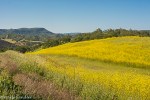
Fields of mustard at this ranch.
Another view taken along Lakeside Rd.
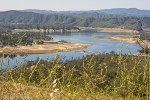
This is a finger of Lake Nacimiento.
You can see how far down the lake is.
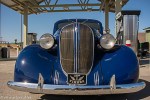
We stopped to get gas and saw this old car.
This is beautiful, not like some of the old cars I shoot.
The owner is proud of his car and didn’t mind me shooting it.
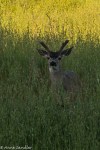
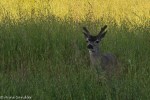
We saw this young buck along the roadside.
We stopped and I shot it out the truck window at 55 mm.
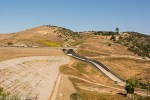
This is a spillover for Lake Nacimiento. No water to spill over.
A bit more of the countryside.
Lake San Antonio. I was half way down the boat ramp.
Do you remember the mossy trees and mustard that I went all the way to Napa Valley to shoot? Well, I found the trees in our campground and the mustard in the countryside here at Lake San Antonio.
It’s amazing how much I’ve learned through photography, and I don’t mean learning the art. I’ve studied birds, flowers and trees! So during this trip I had the opportunity to educate my husband in the flora of the area. Sadly, because the lake is so low now, there wasn’t the opportunity to see many water fowl. There were plenty of turkey vultures though.
In addition, I became acquainted with the various stages of the dreaded fox tail from beautiful to mowed down so they stick in your socks and dogs paws. All weekend I picked fox tails from Gem’s hair, checked his ears and made sure he was tick free. The little guy was happy to be home.
In this post, I’ll give you the campground tour including the mossy trees. You’ll have to wait for the next post to see the mustard.
Mossy tree.
Another tree with moss.
I just liked this plant/tree.
Expressive and beautiful.
Tree and photographer.
Now I’m shooting ground cover with the macro.
I also shot this log with the macro lens.
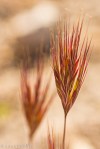
What’s better than one fox tail?
Two!
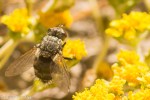
I saw this fly but didn’t have a swatter, so I shot it instead!
Some more of the yellow ground cover.
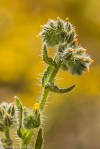
I don’t know what this is, but it was leaning just above the ground cover.
Mossy tree up close.
I think these are young fox tails.
Again, I don’t know what this small plant is either, but I think the macro captured it well.







































































 Slow Shutter Speed