Lens Artists Challenge#350: Zooming

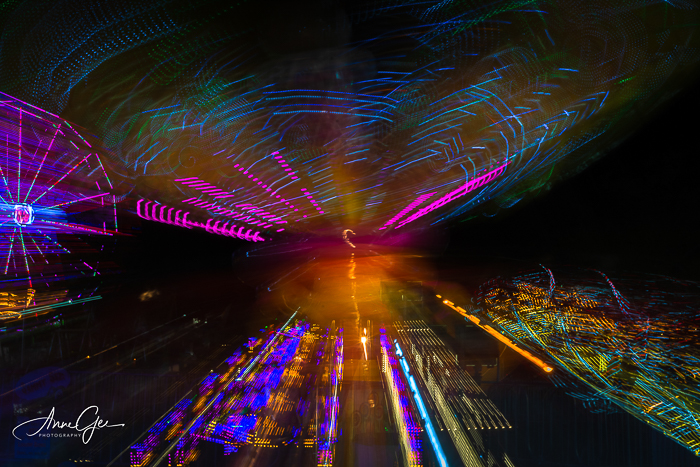
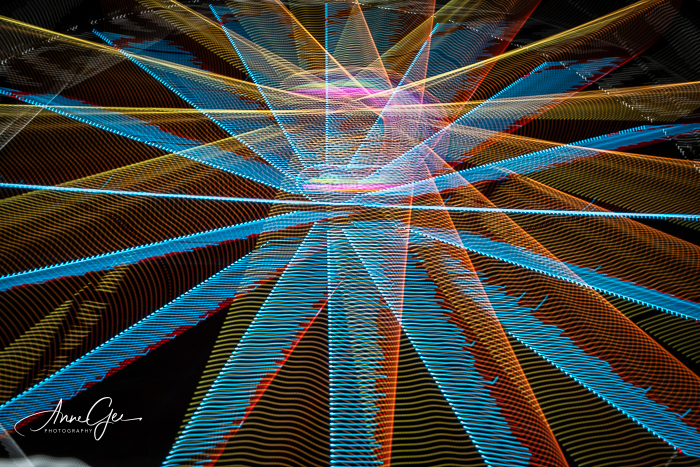
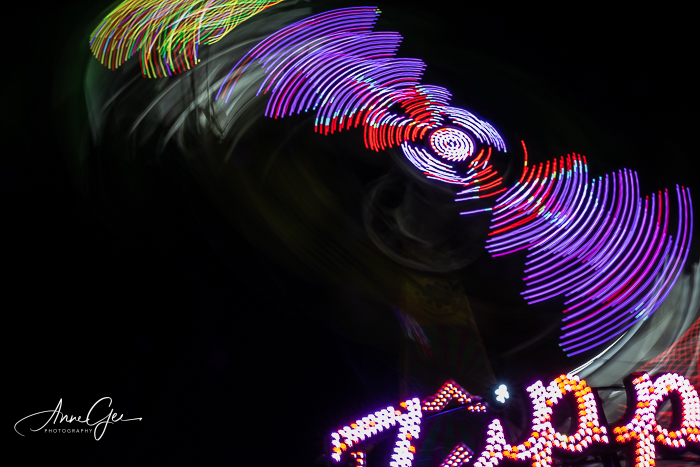
Zoom, zoom, zoom! It’s one of my favorite types of photography, and it is fun! Zooming is part of the Intentional Camera Movement family, but instead of moving the camera, you are just moving the lens back and forth. This yields photos of a different kind!

In this technique, you adjust the focal length of a lens to change the magnification of the subject, giving the appearance of moving closer or further away without physically changing the camera’s position. This is achieved using a zoom lens, which has a variable focal length. 

Now, this is going to be a do as I say and not as I do challenge. Remember the “Break the Rules” challenge Ritva recently gave us? I break the rules when it comes to zooming.

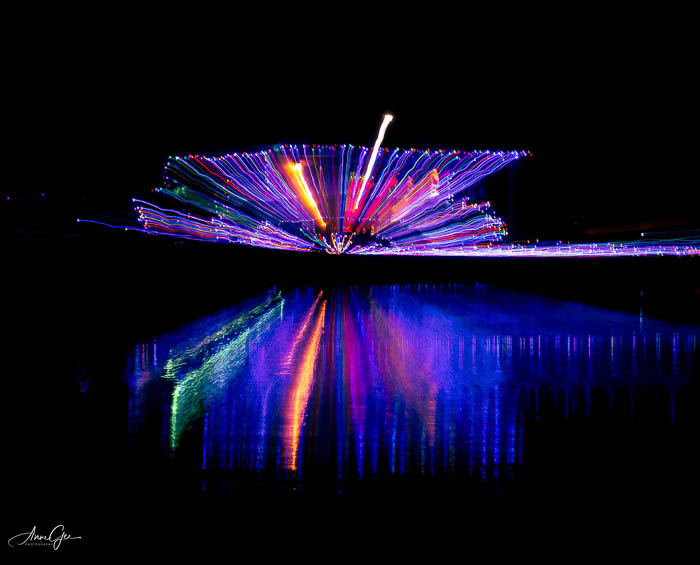
If you can catch a reflection while zooming, you get an additional WOW!

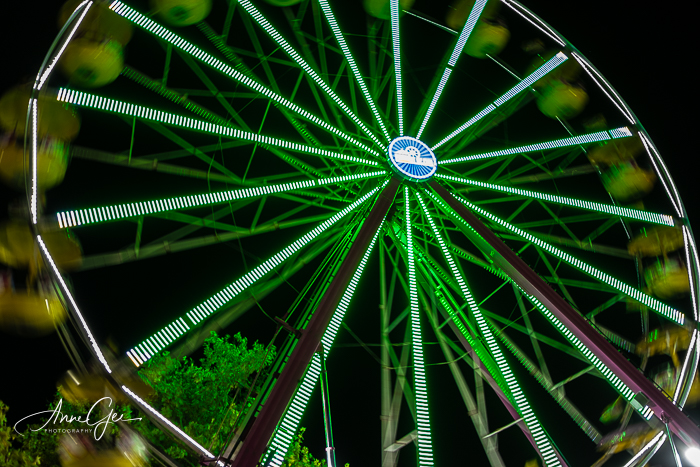
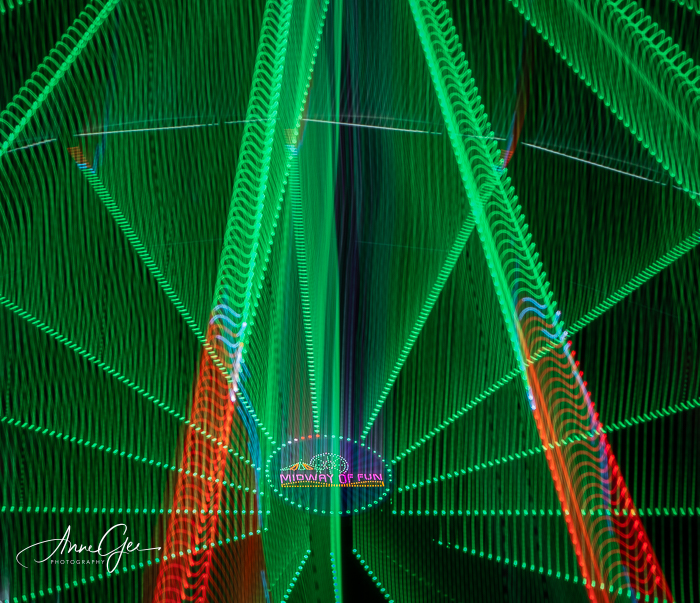
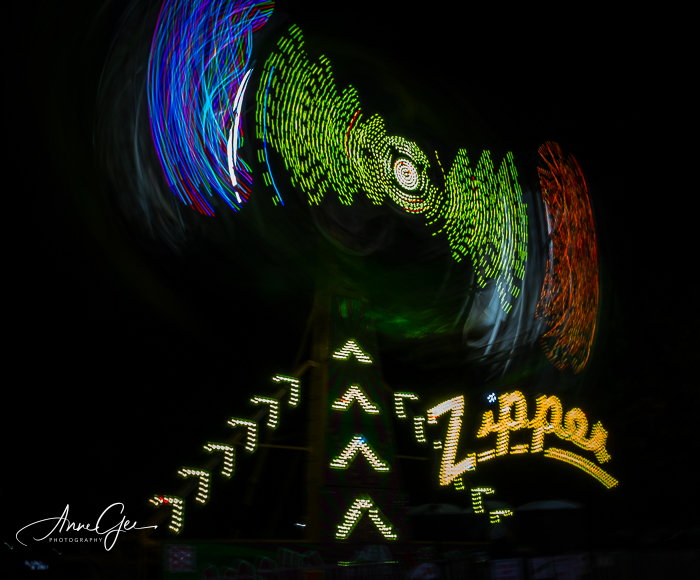
Use a tripod. I sometimes do use a tripod. That’s how I got the name of the ride clear in this picture while pulling the lens in.

But sometimes a tripod isn’t handy. Just hold the camera as steady as possible while you’re zooming the lens.

You can start with a long exposure photograph and then have more fun experimenting. This was taken during Christmas time, which is a great time to take out that zoom lens and have fun.
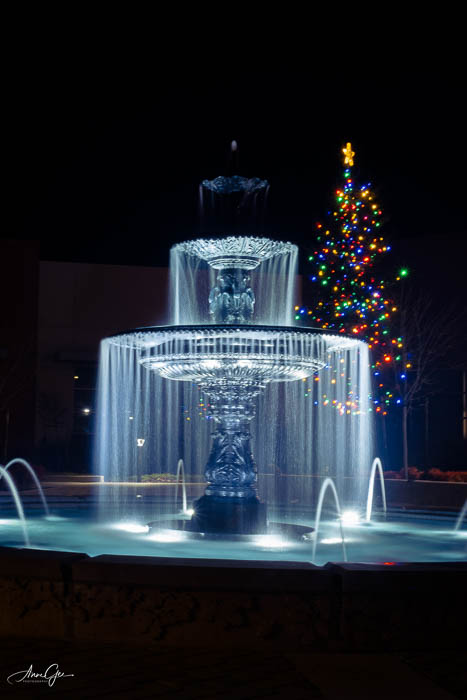
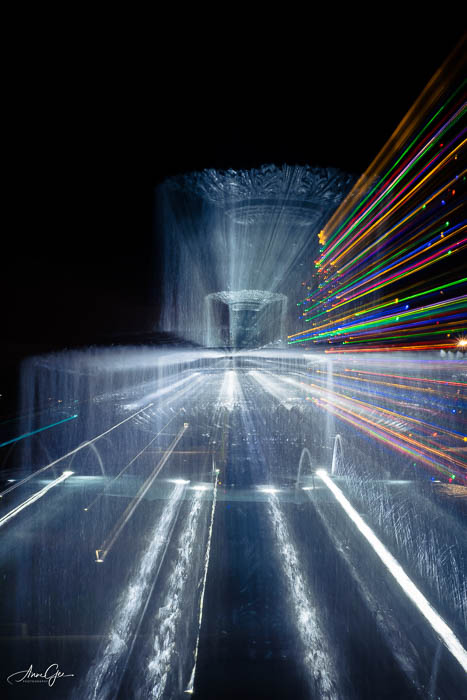
If the light is bright, you’ll need to use a polarizing or neutral density filter to stop down the light. Either that or find shade. This image was taken towards evening. I was totally unprepared to do zooming but wanted to try it. I’ll confess that I don’t usually carry a polarizer or ND filter with me each time I go out. These days, I go as light as possible. I do have them though. You’ll also notice there are no daytime photos in this post. Remember do as I say—not as I do!

Additional suggestions:

Photograph at a low ISO—100 or less.

Use a long shutter speed. Start at 1 second and go down from there. You’ll need a long shutter to give you time to move the lens in or out.

Start with an aperture of F/22 and move around from there.

Use manual focus.

The longer the focal length of your zoom lens the better your effect will be. I’ve used 18-55mm and it yielded good results, but the 18-300 was better. My last thought: prime lenses do not zoom!

Your challenge this week is to take your camera and zoom lens out for some zooming. If you don’t have a polarizing or neutral density filter, then go out at night. There are always lights for you to have fun with: streetlights, neon lights, window light displays. This takes practice, so don’t get discouraged. And, there is no right or wrong in Intentional Lens Movement–just good old enjoyment!

When you post, remember to link to this post and use the Lens-Artist tag. I want to see all of your zooms!

I really enjoyed seeing your post on Tina’s challenge, “The First Thing I Thought Of.” And your humor was greatly appreciated. Laughter is good for the soul. It’s amazing how a picture can have different interpretations.

Next week Ritva will be back leading the challenge, so be sure to look for her post. In the meantime, stay healthy and live in gratitude!

Lens Artists Challenge #347: Break the Rules

When I started this hobby, I didn’t know there were rules, and it was a good thing. I probably would have walked away from any type of constraint. I just enjoyed taking pictures, composing and learning about my camera.

Ritva’s challenge this week has us finding images where we successfully broke the rules–or maybe unsuccessfully! How many of us keep the images that didn’t work? I throw them out, keeping only the best or the ones I like. Those are my excuses for not finding total rule breaking images in my archives.

I chose 2020 for my search because it was sort of midway in my photographic journey. Here’s what I found.

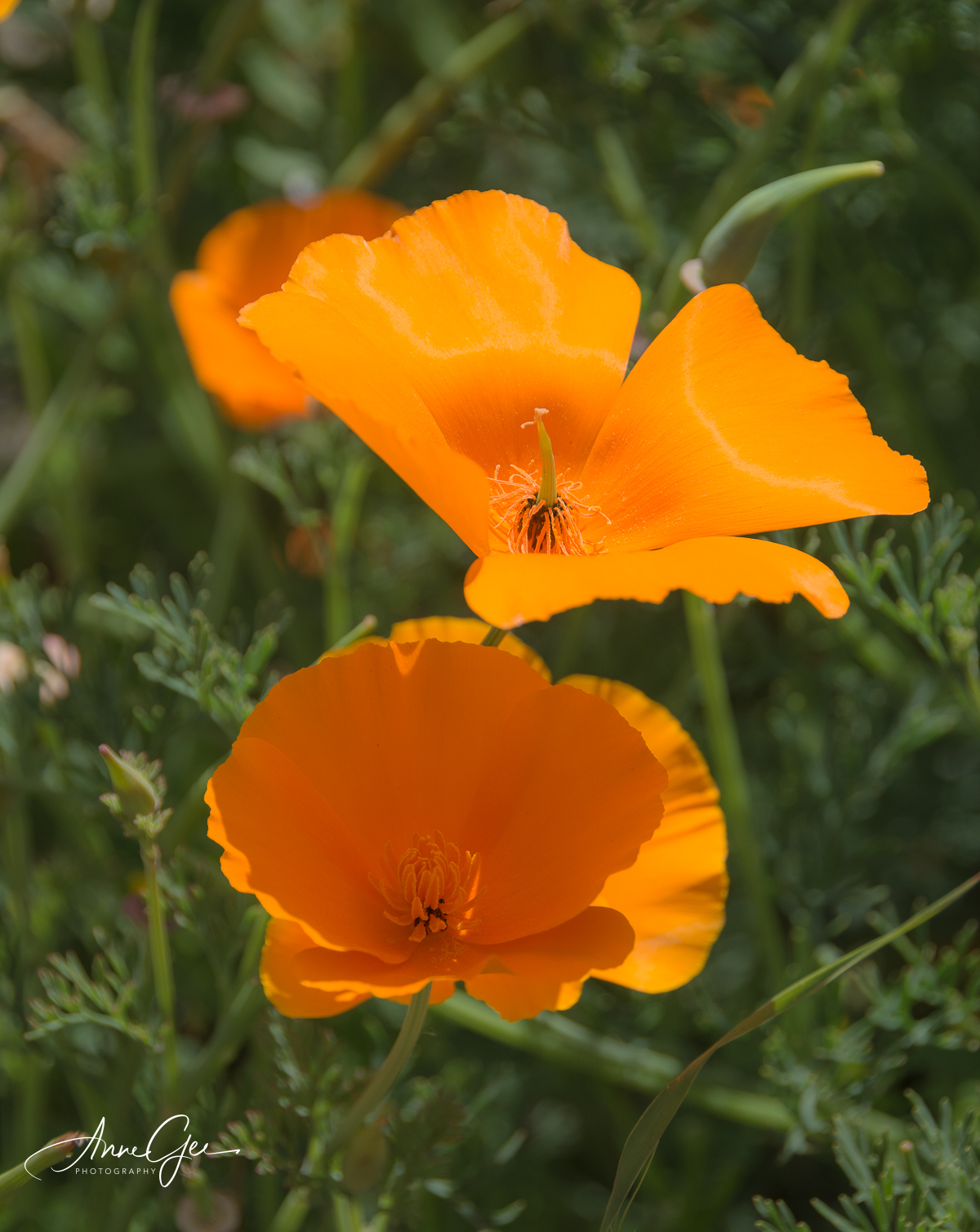
These poppies are totally centered. You might say I filled the frame, but only because I cropped in too tight.

It’s never a good idea to photograph wildlife from the rear, but look at the way this hawk has it’s head turned.

And should the horizon line be in the center of the frame? Maybe it’s okay when the sky is as fantastic as the ground.

Never shoot into the sun! Unless….

Is zooming breaking the rules? I don’t know. I just have fun with it.

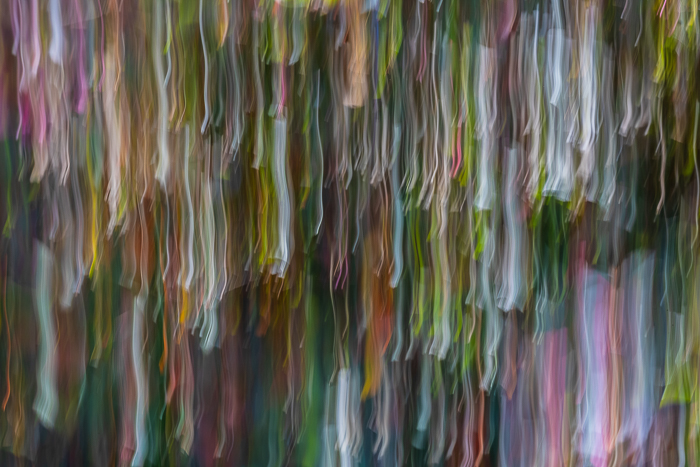
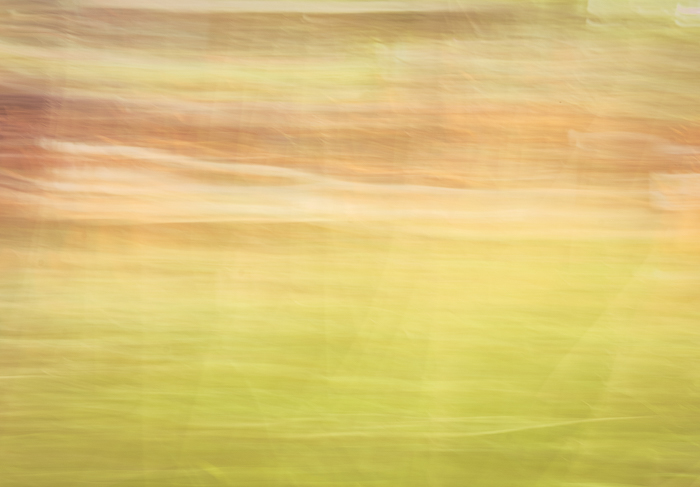
And what about moving the camera while the shutter is open? You might get a scrambled jumble of color.

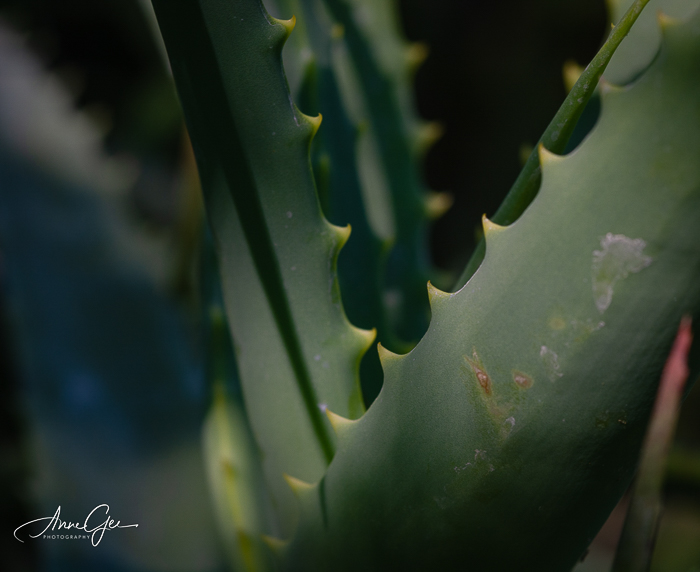
And finally, I think this was a cactus. I don’t know what I did to get this picture.

I think photographic rules are meant to be broken. I basically understand the rule of thirds and not to place the horizon line in the center of the composition; the rest is a mystery to me. I just compose the picture the way I like it.

Thanks Ritva for this soul searching topic. It really was a difficult challenge–at least for me! When you share your response, please link to her post and use the Lens-Artists tag. Last week Sofia challenged us to post cinematic pictures which was an equally difficult challenge. I enjoyed seeing all your creativity. Next week Egidio will be leading the challenge, so look for his post on Saturday.

In the meantime, stay safe and live in gratitude!
Lens Artists Challenge #321: Intentional Camera Movement

Come along with me on my journey to discover Intentional Camera Movement (ICM). I’ve never really attempted to do this except for the occasional image. So we’re going down that rabbit hole together! Yes, again. You’ve got to love that rabbit. The rabbit hole was found at Bushnell Gardens and Nursery in Granite Bay. Photo buddy Richard came along.

The first tip came from my friend Laura when I photographed my only other ICM. Move your body and not your camera. That way your lines are straight. This was a gate outside the nursery. I bowed before it.

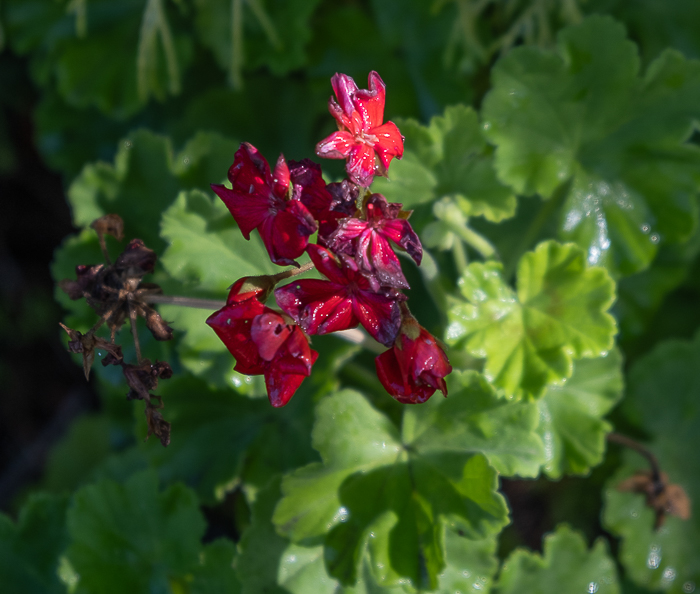
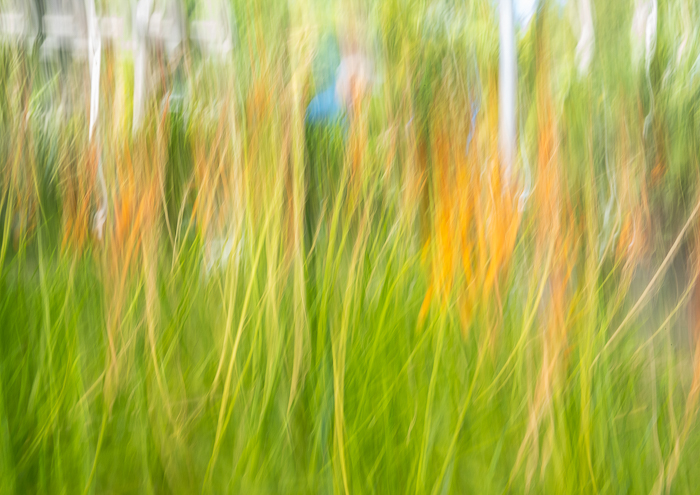
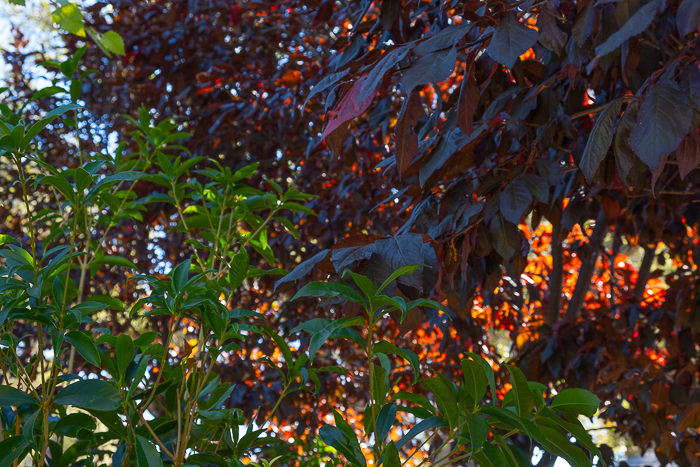
I think for this one, I just wiggled my body. Laura would be proud that I didn’t move the camera. Richard liked my dance. I like the burst of color surrounded by soft greens. I’ve found it’s important to have color in ICM. I think the bright floral color help this image.

Next are four images showing what the plant really was and three more showing various degrees of ICM. The last one being a horizontal move on my part. These pictures were hardly edited. I just cropped and saturated colors. The fun was taking them.

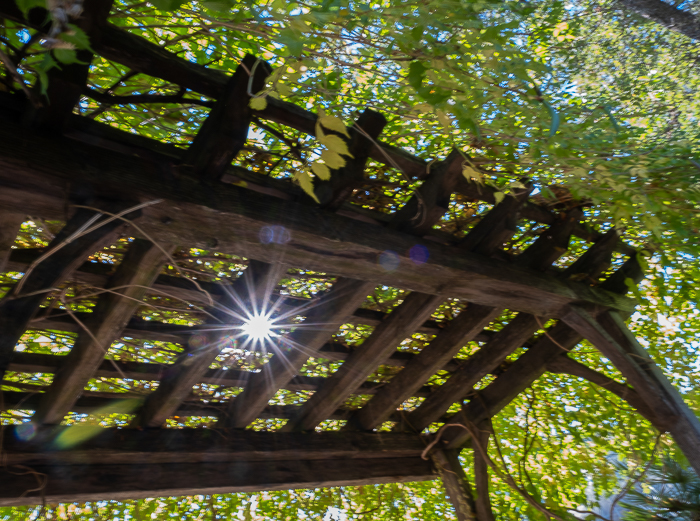
When I stood under a lattice and saw a sum burst, I just had to try ICM. The sunburst came out at as a super white stripe that dominated the image, so I tried to tone it down. Maybe I did too much cover with the brush. But you can see ICM can be done on more than just foliage.

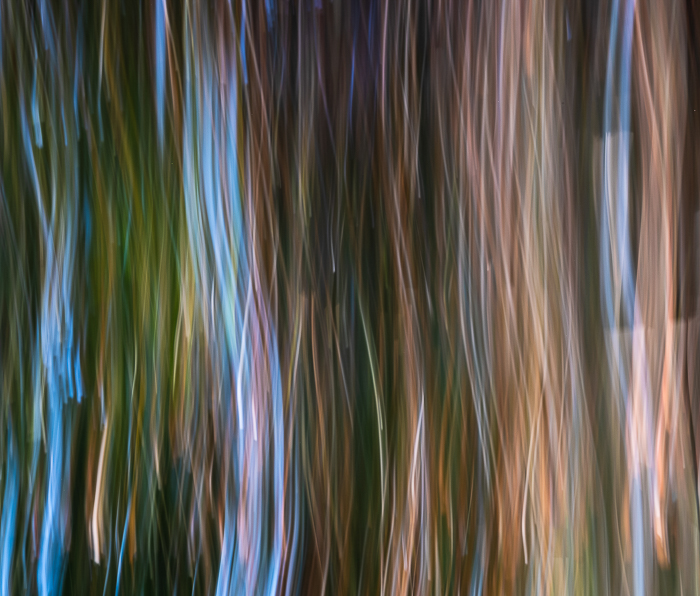
I also wanted to try to do a swirl. So I chose a long shutter speed and bent my body to one side until the shutter closed. I’m happy with the way these turned out. The longer the shutter is open the more swirl and softness you get.

Of course, I had to zoom a bit, moving the lens and not the camera. I forgot to take a good picture, but you can tell what this plant looked like before the zoom.

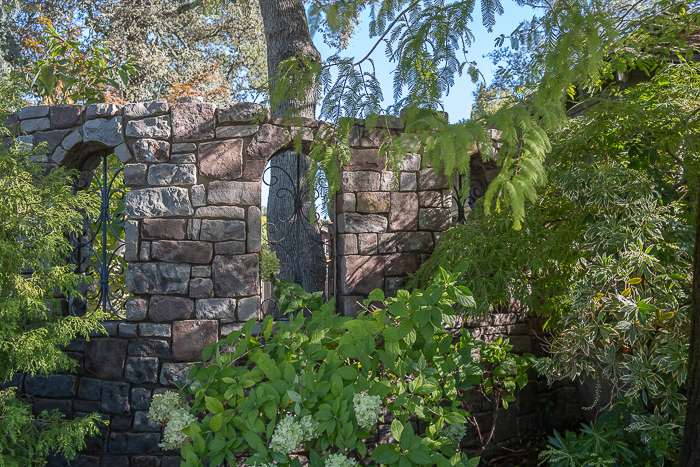
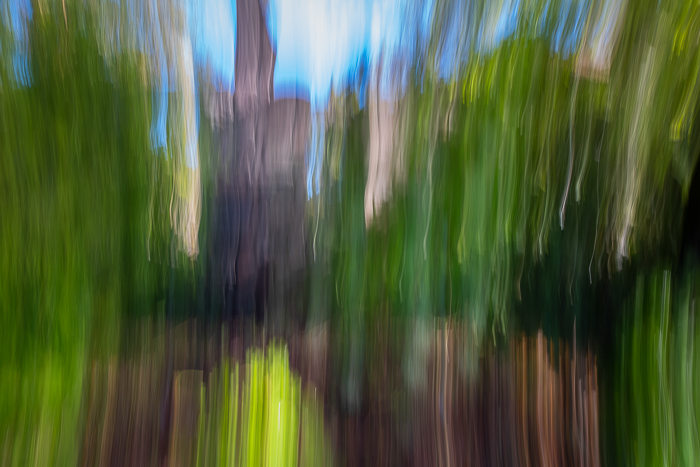
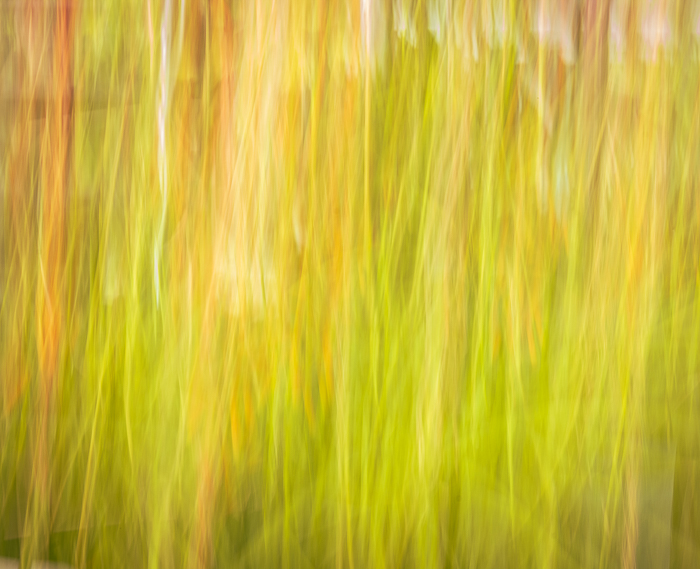
For my last set, I chose to photograph two trees. One had leaves turning and the other was green. I enjoyed this experiment. I liked how the colors and light added vibrance to the images.

For all these images, I didn’t go lower than a shutter speed of 6. I found that the image lost definition. I also learned that the more light you have, the more difficult it is to photograph ICM. Next time, I’ll bring along a neutral density filter and/or choose a different time of day.

I had a lot of fun preparing for this post, and I hope you do too. Maybe you’ve been out already learning and picking up tips. And maybe you’re a pro at ICM. Whatever the case, please share your thoughts and images. I’m in the learning stage also, and every bit helps.

We all had fun picking images from the past as Sofia had us looking back last week. I enjoyed experiencing all your wonderful memories. When you share your post for this challenge, please link back to mine and use the Lens-Artist tag. In the meantime have fun learning and experimenting with ICM.

Lens Artists Challenge #303: Connections

Every day we connect with people and places; some stronger than others. I’m the type of person who needs those connections. Right now, my old dog is resting near me as I type. Just having that connection comforts him. And, yes, his presence comforts me.

This week, Donna wants us to explore what connections mean to/for us. Since I retired 10 years ago, photography has connected me to wonderful people, some who have become great friends. I’ve also become a member of PSA and one of its chapters and clubs.

I’ve learned so much through workshops from the Gold Rush Chapter and the Sierra Camera Club. This image was featured in the PSA June Showcase.

Some other connections.

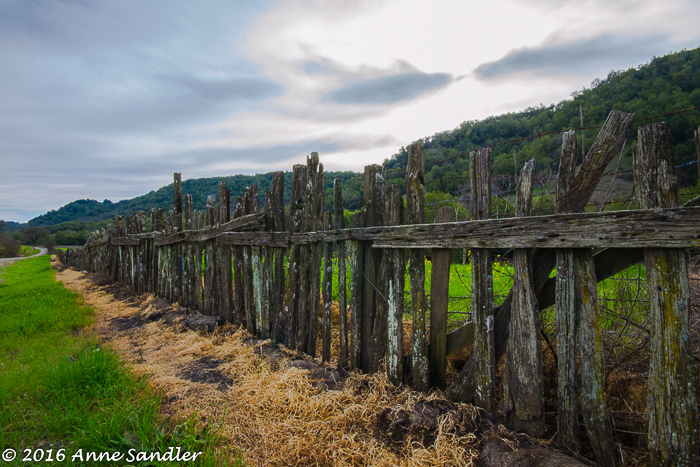
Fences are individual boards made of wood, steel, plastic etc. that are all connected together. Once connected, they separate one side from another, keeping people or animals either in or out.

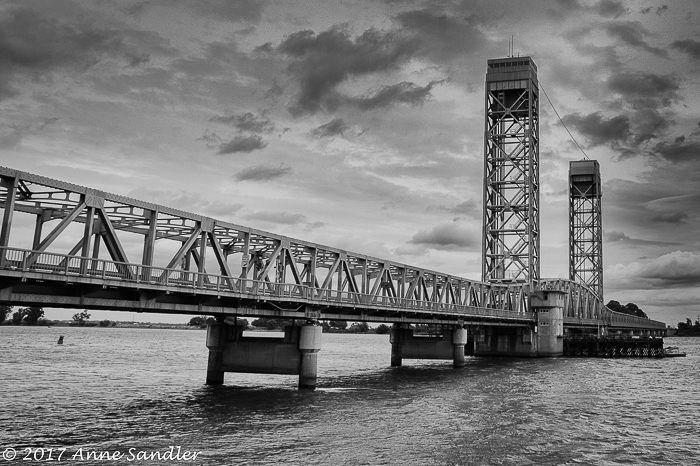
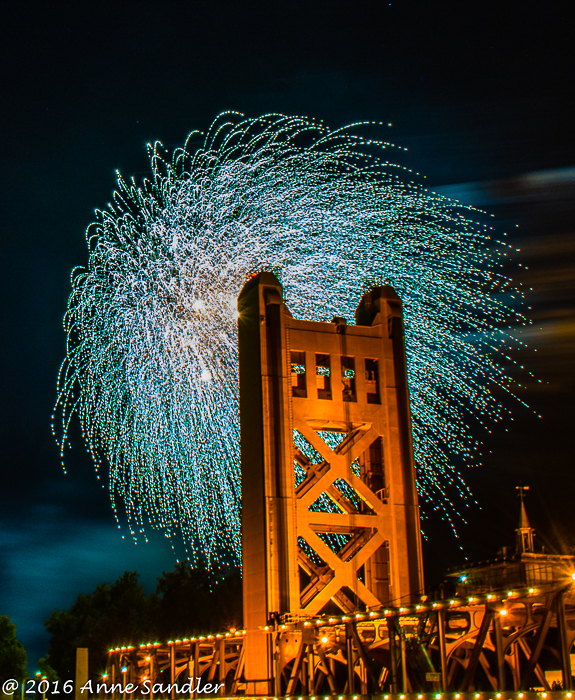
Bridges connect one side to another. They come in all sizes, go over rivers, streams or even land.

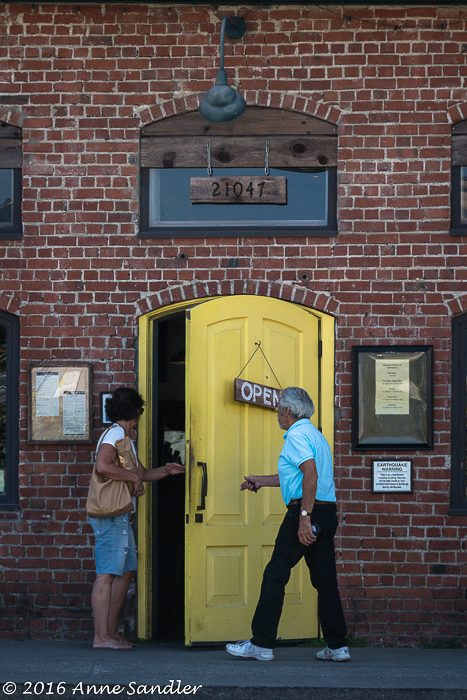
Doors connect us to what’s inside or back out.

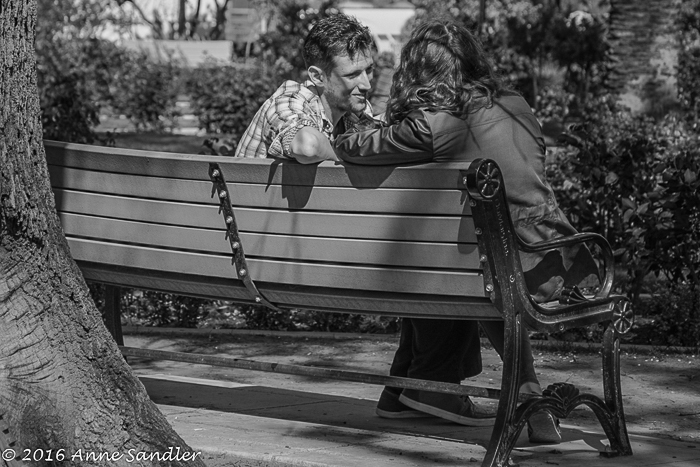
A park bench is a great connector. It helps connect people to their thoughts or nature, friends to each other or sweethearts to further discovery.

Holidays, fairs and celebrations connect us to fun, enjoyment and each other.

We don’t have to look far for connections. Just say hello and smile to a stranger–you’ve connected. Thank someone for helping you or ask for help–you’ve connected. And my dog, Gem, would suggest that you pet your animal so you can connect with unconditional love and loyalty.

Thank you Donna for reminding us that connections are important to all of us. Look at how we have all become virtual friends through LAPC. Remember to link to her challenge when you post your response and please use the Lens-Artist tag.

John certainly presented us with a great learning experience last week. I enjoyed seeing all the various responses from our community. Ritva is presenting our next challenge, so be sure to look for her post. Until then stay away from monster colds, make new connections and stay safe.

Playing with lens and camera movement!

I enjoy doing things differently, especially when it comes to my camera and lens. Last week a small carnival occupied some of the Sunrise Mall parking lot in Citrus Heights. Perfect! I had to go and two photo buddies met me there.

When I say small, I mean not too many rides that are great for slow shutter speed photography. That coupled with my injuries from the August auto accident (They tell me it will be a long time recovery for my neck and shoulders.), helped me decide to leave my tripod in the car. You’ll see that in some cases I needed it.

Here are the pictures–handheld.

Some of these may not be perfect, but I had an hour’s worth of fun. Next year the tripod!

A promise is a promise: Happy New Year

I always try to keep my promises. The operative word there is “try!” In my last post, I said that I would be going out to shoot Christmas lights when my friend Jean got her new camera, and I kept that promise. I was really dragging that night, and I’m so glad that my promise got me up and out. We had a lot of fun in the short time we were taking photos.

Our adventure took us to the Fab 40 area of Sacramento–an area of old beautiful homes. This neighborhood’s holiday effort didn’t compare to the residents of Dove Court in Orangevale; but with my fatigue and Jean’s knee, it was perfect. We walked the two blocks, shooting and talking with some residents. I saw two displays I liked and had fun zooming my lens.

Oh, Jean’s new camera is a tiny Panasonic mirrorless that does a lot. It made my Nikon D7100 look huge and feel heavy! I hope she finds a great deal of joy in using it.

Happy 2018 everyone. My wish if for you to have good health, prosperity and fun!