
For her first challenge as an LAPC Team member, Donna Holland of Wind Kisses has chosen the topic of Messages. I am challenged with this challenge!! When I photograph and later look at my images my messages are in the form of feelings. So I’m hoping my feelings will turn into messages for you.
My first visit is to the Sacramento Historical City Cemetery. This is a very old cemetery, full of history and simply beautiful. When I bring my camera to this cemetery, I’m overwhelmed with sadness and peace. There are family plots containing large and beautifully engraved monuments and/ or statues, and then there is the simple statement of great loss like this one grave marker. I guess the message is to live your life in gratitude.

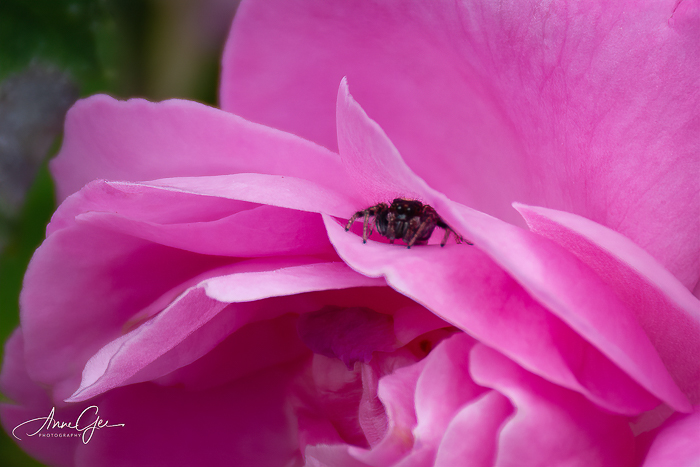
The cemetery’s beauty is given to us by wonderful volunteers who plant flowers to bring joy for those of us who visit. There are roses, poppies, bushes and other beautiful florals. This rose had a guest and I just couldn’t resist taking its picture. The feeling is joy and the message might be any shelter is a good shelter!
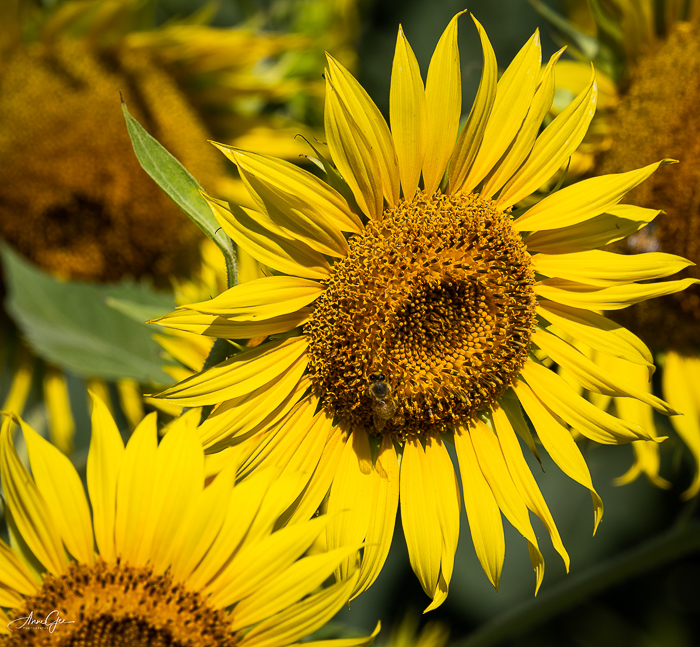
On the topic of flowers, sunflowers always help me smile and feel great. I guess the message I get is “Don’t worry be happy!”
Typically, after we photograph our sunflowers, we go over to Mezger Zinnia patch in Woodland where the family plants flowers each year and encourages people to pick them and give them to someone who cannot come and pick the flowers themselves. They even provide vases. Typically, people will pick two bouquets; one for themselves and another for someone else. What does charity feel like. To me it feels like hope. The message I think is that people do care about each other.

Keeping with the yearly theme, Wide Open Walls happens once a year in Sacramento. In 2020 we found a very special mural dedicated to Ruth Bader Ginsberg shortly after her death. This mural symbolizes her determination to do the right thing while she sat on the Supreme Court. Seeing this mural filled me with pride as a woman. I guess the message is “Yes you can!”

Another image of determination is from the Nimbus Fish Hatchery. Each year salmon swim upstream to lay their eggs. Following their instincts, they do this facing certain death. I’m amazed at nature’s plan for survival. I would call that courage. I’m not sure what message it sends except that you need to do what your instincts tell you to do.

I’ll close with an image from the annual Chalk It Up Festival in Sacramento. Artists from all over gather and create their art with chalk. This art is beautiful, but it can’t last long. After the weekend festival, people will walk on it and sprinklers will spray water on their beauty. Why do the artists put all that effort into it? Do they get pleasure from seeing the enjoyment people get from their effort. I feel grateful that I get a chance to see their art. Maybe the message is to create joy for others.

Thanks Donna for this soul searching topic. At least it was for me. When you post your messages, be sure to link to Donna’s wonderful post. I know she, and the entire team, will want to see all your replies. Oh, be sure to use the Lens Artists tag. Next week it’s Patti’s turn to challenge us and she’s giving us a hint on her theme: Shadows & Reflections in Monochrome.
If you would like to participate weekly in our Lens-Artists Challenge, click here for more info.


 Slow Shutter Speed