
Timing is everything. Amy’s challenge this morning is on contrasts: shadows and light, colors, hard and soft, etc. It just happens that this is the morning of the annular (partial) solar eclipse. We didn’t see much of it in California, but NASA put on a good show for us. Amy, I hope you were able to see the totality in Texas.
NASA gives this explanation of a solar eclipse: A solar eclipse happens when, at just the right moment, the Moon passes between the Sun and Earth. Sometimes the Moon only blocks part of the Sun’s light. This is called a partial solar eclipse. Other times, the Moon blocks all of the Sun’s light. This is called a total solar eclipse. As the Moon blocks the Sun’s light, it casts a shadow on part of the Earth.The Moon’s shadow creates a trail as Earth rotates. This trail is called the path of totality. If you want to experience total darkness during an eclipse, you have to be in the path of totality. In that path, the Moon completely blocks the Sun’s light for a few minutes. It gets so dark that it looks like night time during a full Moon!
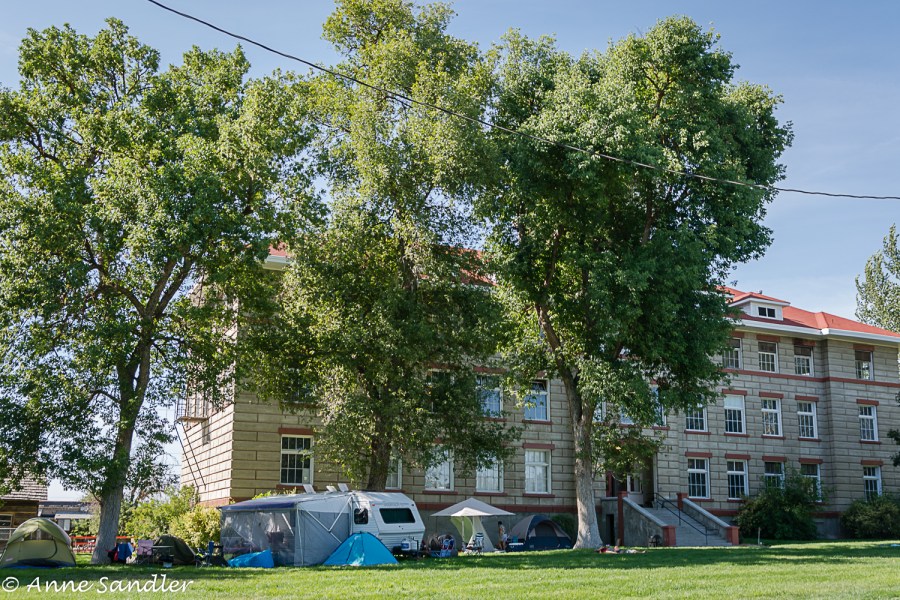
So why am I mentioning this? Watching the eclipse unfold on my computer screen, I thought there is no better contrast between the sun and moon during this rare occasion. This took me back to the total solar eclipse Richard and I viewed in Idaho in 2017. That was an amazing experience. We were camping in our trailer, but crowds came in that morning. During the eclipse the crowd went quiet until totality. Then the clapping and yelling started. Wow!
I took pictures with my Nikon D3100, armed with a solar filter, handheld. Here are my results of nature’s contrast of the sun and moon from beginning to totality and the end.
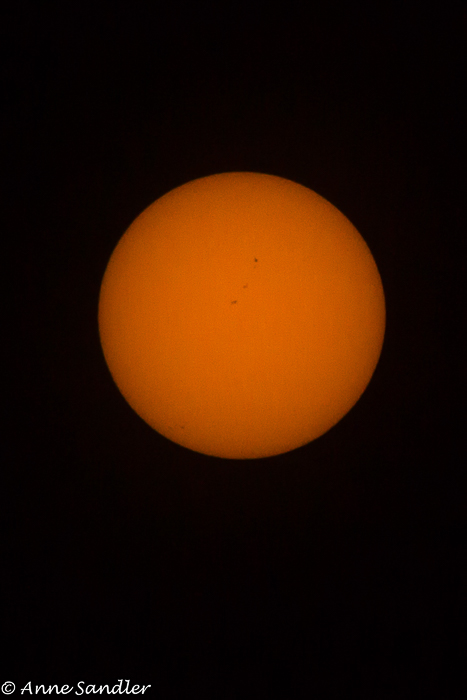


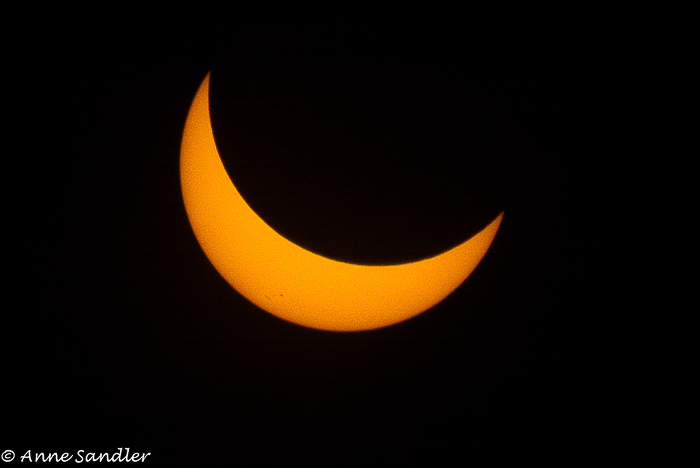


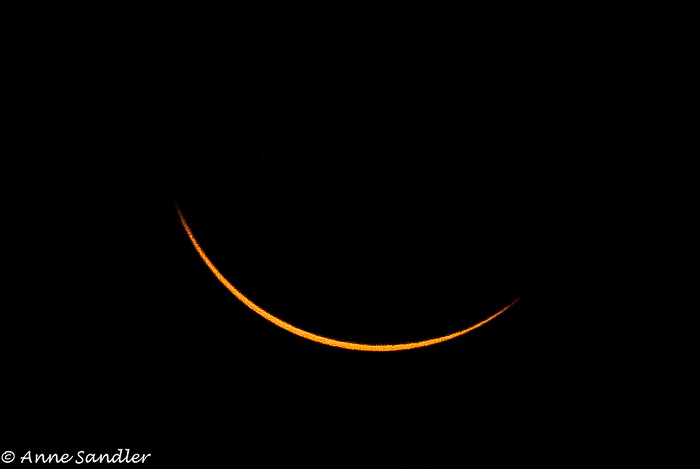

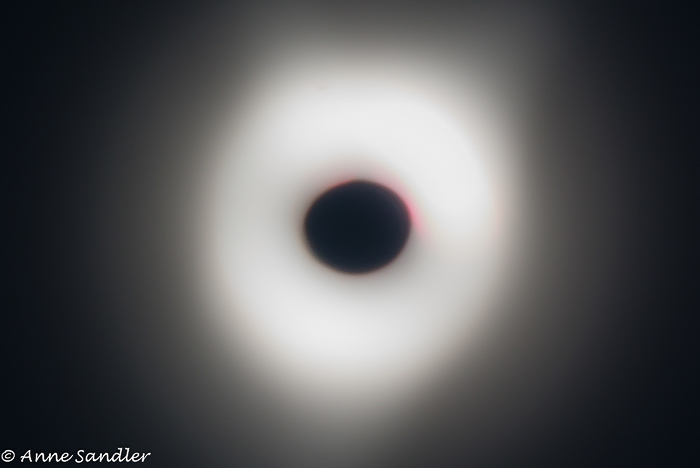


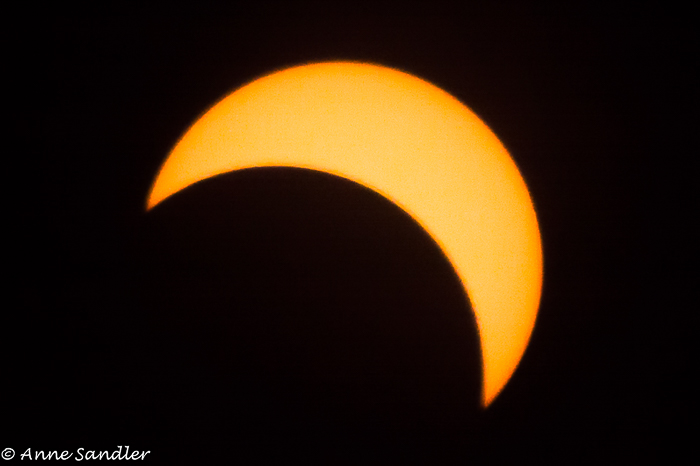

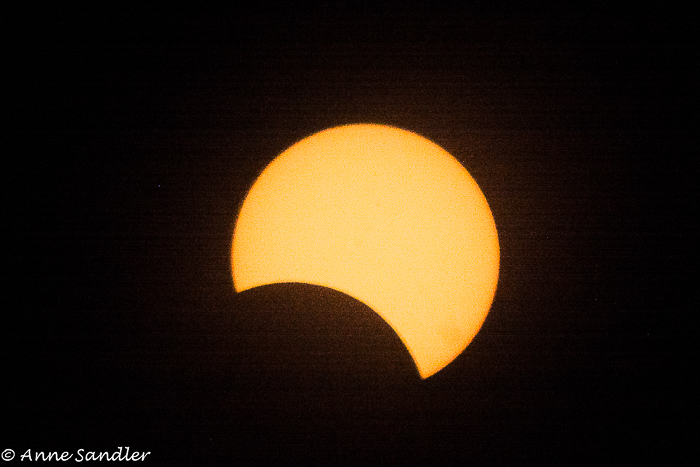


I hope you enjoyed my cosmic contrast scenes. Thank you Amy for encouraging me to look back. When you post your contrasts, please remember to link to Amy’s post and use the Lens-Artists tag. I enjoyed seeing all your varied displays last week as encouraged by Ann-Christine. I always enjoy your unique posts and interpretations to our challenges. Next week John is presenting the challenge so be sure to look for his post.


 Slow Shutter Speed