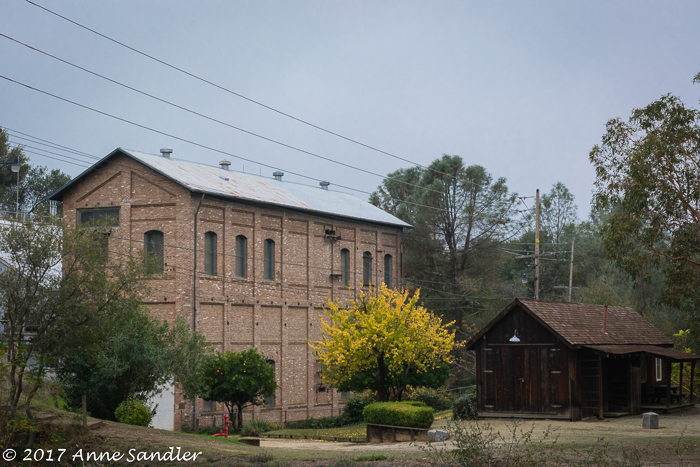
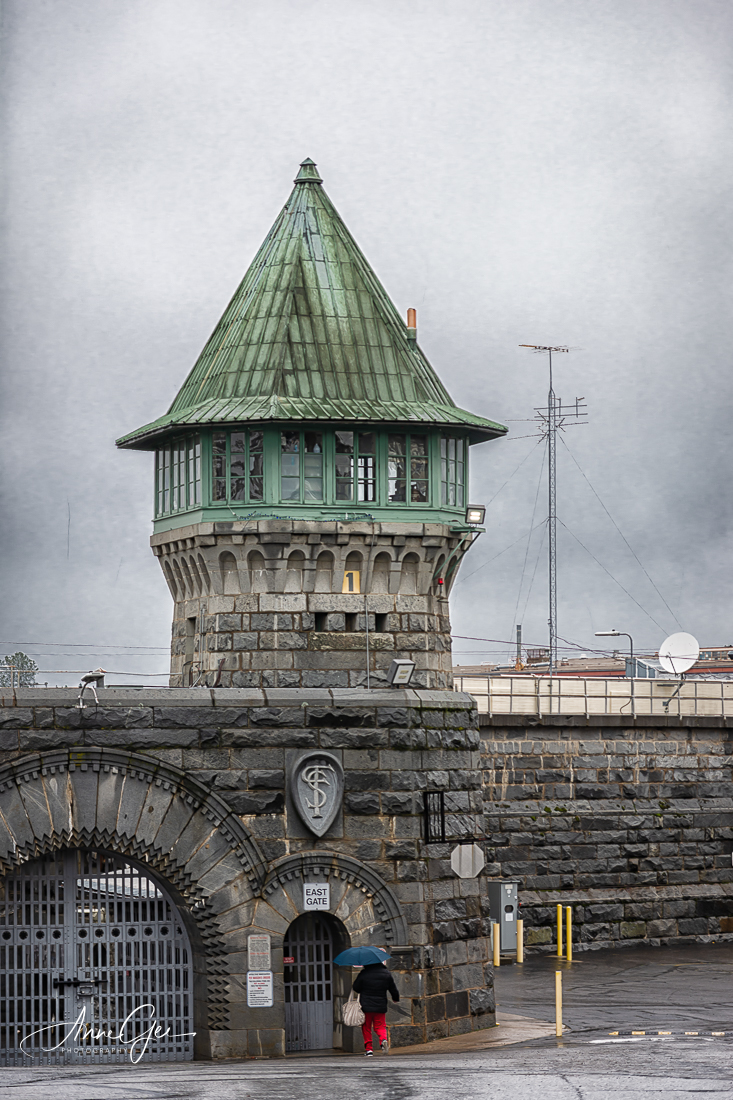
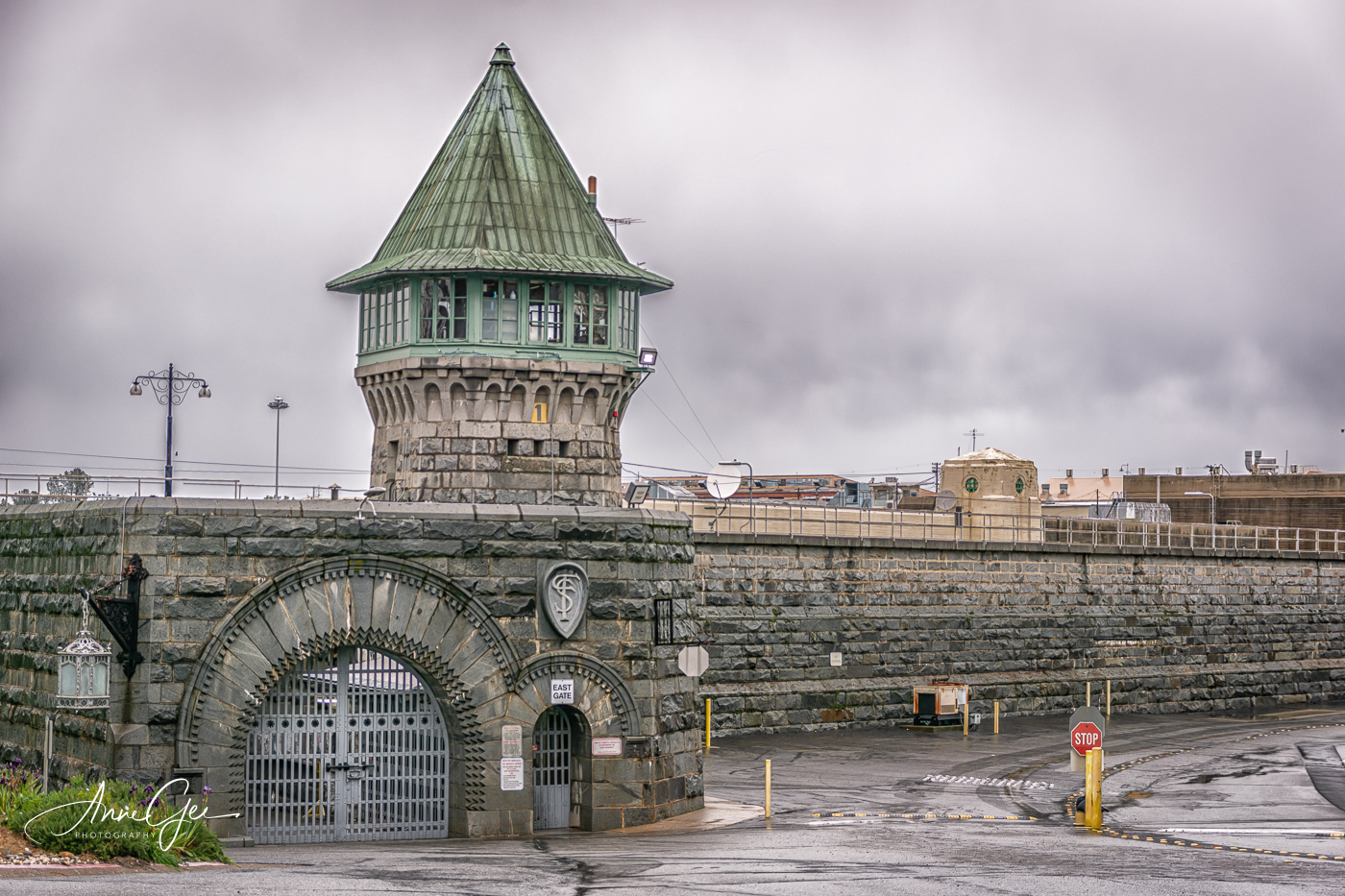
When I first read this week’s challenge from John, Journeys with Johnbo, I immediately thought of the Folsom Powerhouse State Historic Park in Folsom. It wasn’t our destination, but we came upon it while visiting the Old Town of Folsom. And just our luck, the docent was on his way down to open the facility.
The Powerhouse is located on the American River. Here’s how it looks on the outside.

Before I take you inside, please read this brief summary of the Powerhouse history from our favorite online encyclopedia–Wikipedia. It says it better than I can.
“Folsom Powerhouse State Historic Park is a historical site preserving an 1895 alternating current (AC) hydroelectric power station—one of the first in the United States.
Before the Folsom powerhouse was built nearly all electric power houses were using direct current (DC) generators powered by steam engines located within a very few miles of where the power was needed. The use of rushing water to generate hydroelectric power and then transmitting it long distances to where it could be used was not initially economically feasible as long as the electricity generated was low-voltage direct current. Once it was invented, AC power made it feasible to convert the electrical power to high voltage by using the newly invented transformers and to then economically transmit the power long distances to where it was needed. Lower voltage electrical power, which is much easier and safer to use, could be easily gotten by using transformers to convert the high voltage power to lower voltages near where it was being used. DC power cannot use a transformer to change its voltage. The Folsom Powerhouse, using part of the American River‘s rushing water to power its turbines connected to newly invented AC generators, generated three phase 60 cycle AC electricity (the same that’s used today in the United States) that was boosted by newly invented transformers from 800 volts as generated to 11,000 volts and transmitted to Sacramento over a 22 mi (35 km)-long distribution line, one of the longest electrical distribution lines in the United States at the time.”
Leave it to me to photograph close ups of wheels and gears once inside. This is just part of my fun.

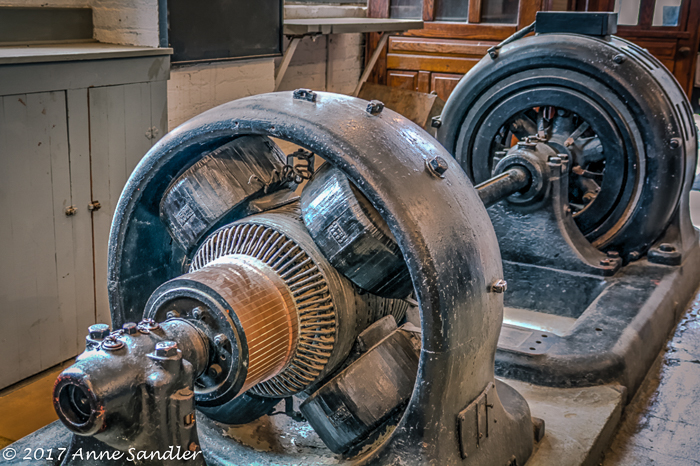
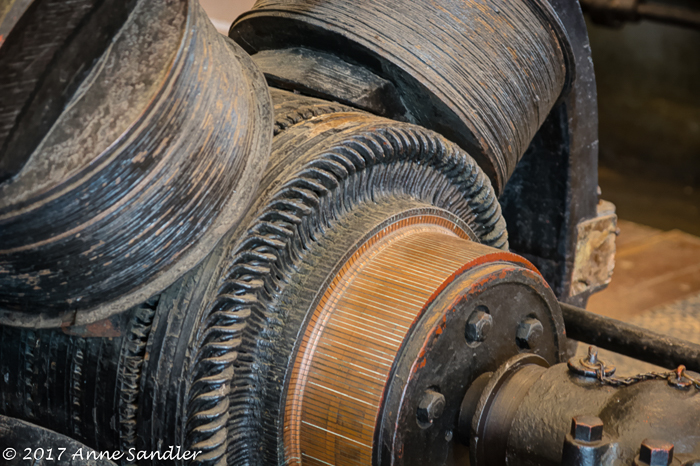
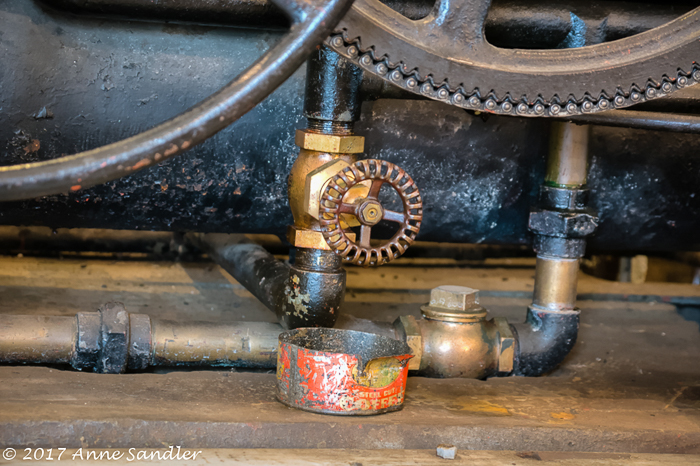
Now for the rest of the inside. I wish I understood more about the use of all the equipment. If you want, you can read more about it here.


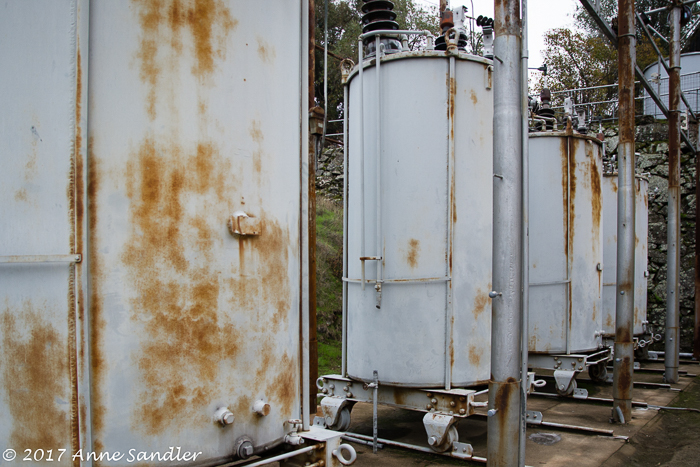
Let’s go back outside for the final photograph. Here you can see the transformers that sent electricity all the way to Sacramento.

Thank you John for giving us such an interesting topic. I’ve already read some of the replies and have been captivated. When you post your reply, remember to link to John’s original post and use the Lens Artists tag. Next week Next week, it’s Amy’s turn to host our challenge, so be sure to visit her site. If you’d like to join in our weekly challenges just click here.
















 Slow Shutter Speed