Lens Artists Challenge #275: Filling the Frame

Photography rules are guidelines and are sometimes meant to be broken. Also, photography is art, and art is subjective. Why am I saying this? Come down the rabbit hole with me!

In the last two weeks, we’ve learned about symmetry and asymmetry—two basic forms of composition. Now we’re going to delve into another: filling the frame.

When you want your subject to stand out, fill the frame! When you fill the frame with your subject, you eliminate various background distractions. The viewer’s eyes have nowhere to wander. Their attention is where you want it.
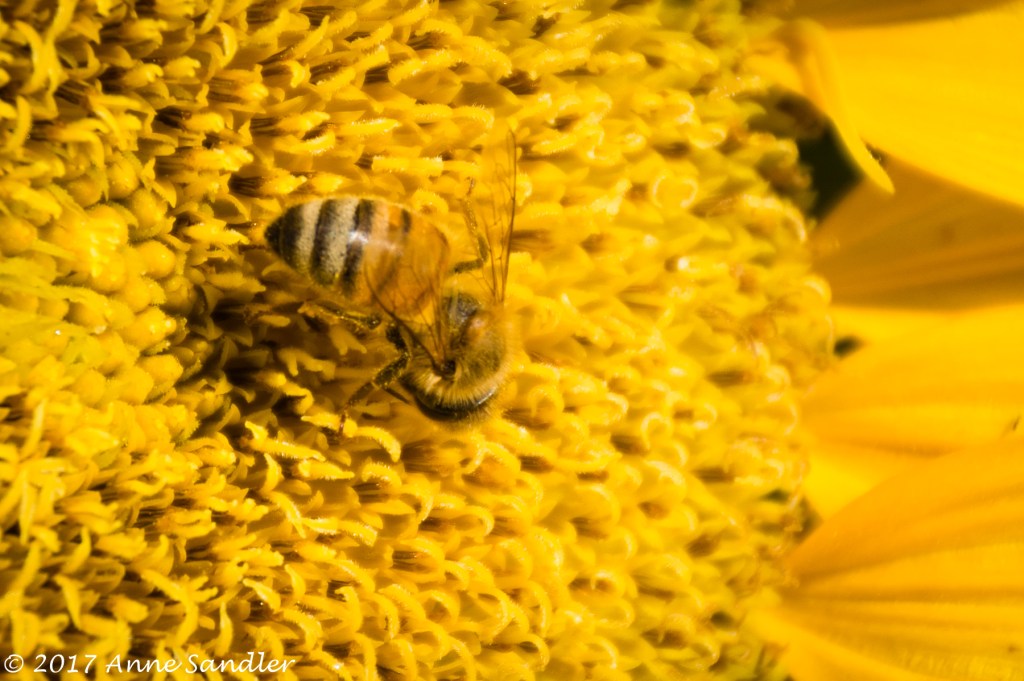
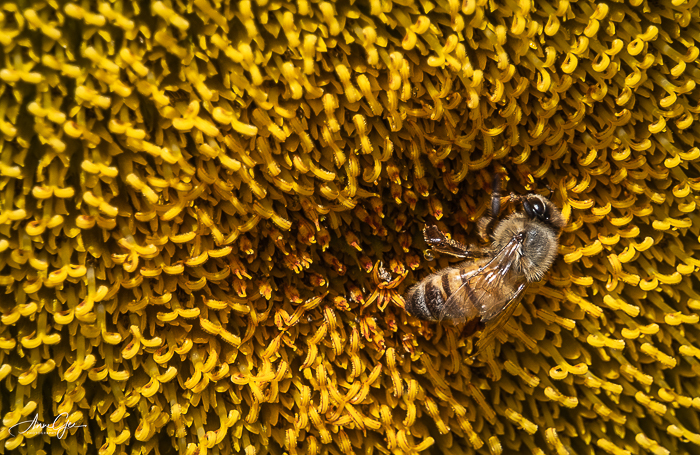
The frame refers to the rectangular scene you see through your camera. When you use this technique, you simply fill your photo’s frame with more of your subject, reducing the amount of background or negative space shown. And it can be filled-in-camera or in post processing. I tend to fill in-camera, sometimes not leaving any room for creative cropping in post. Now, I try to leave a bit more around my subject, so I have more to work with. I did a close crop in post on the sunflower, below, wanting to show the bee in action. By doing this, my sunflower became the background and the bee the subject. Sometimes we just change our minds once we view the image on our monitors.
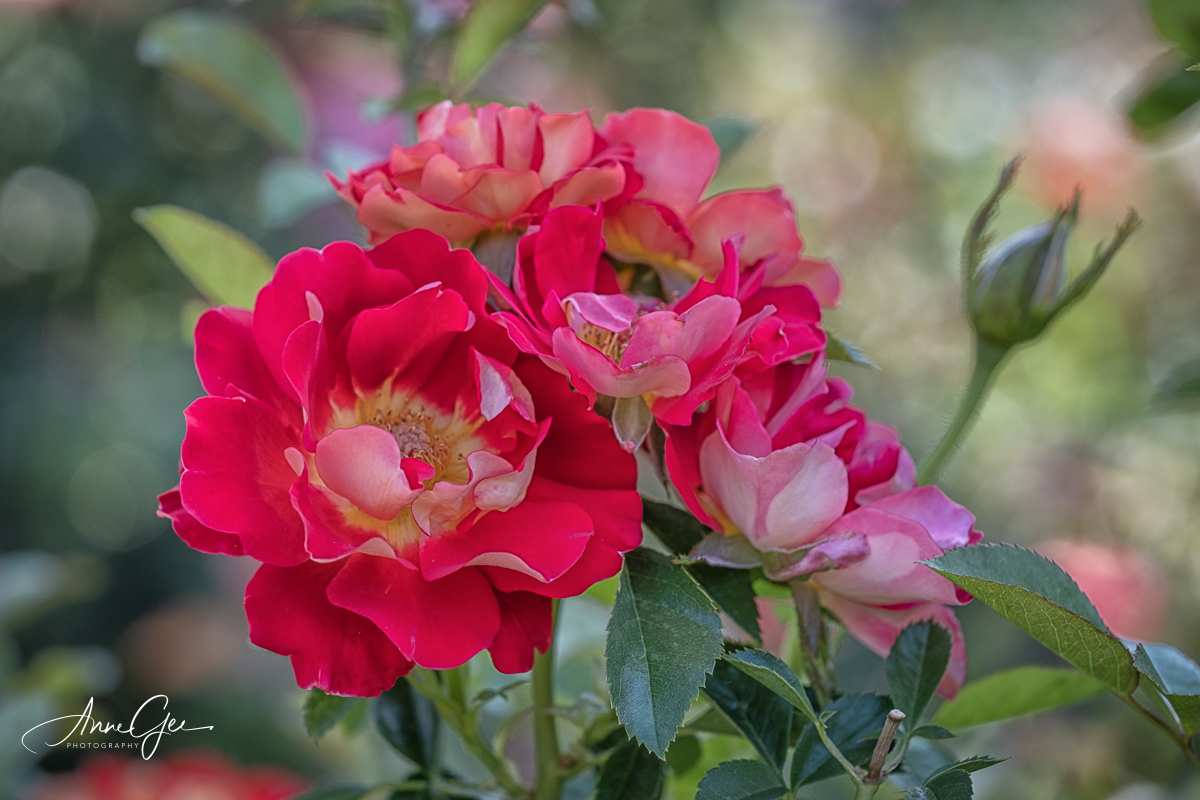
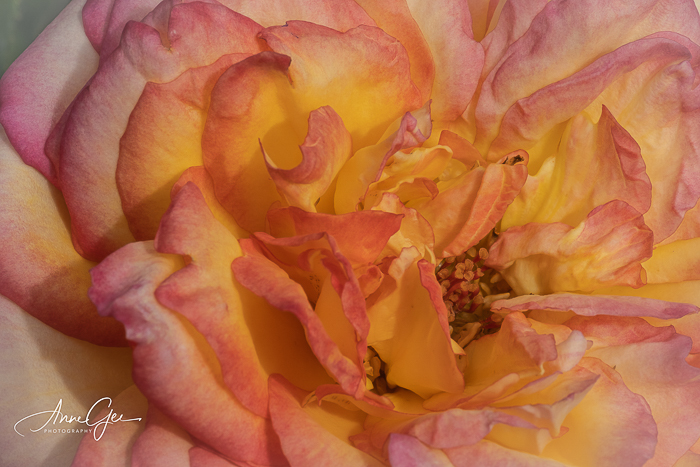
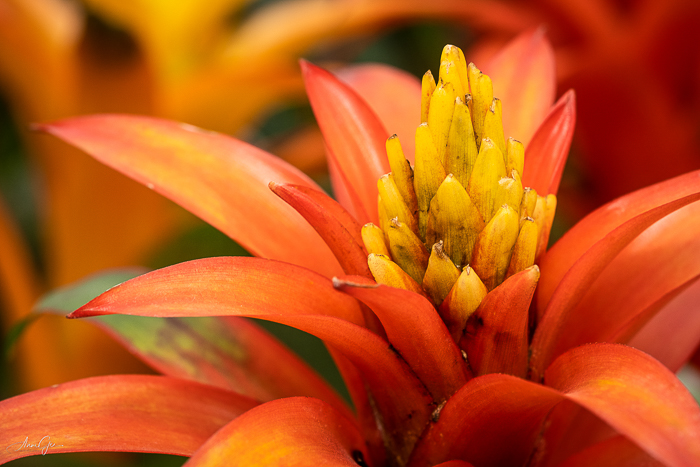
The basic rule for filling the frame is to get close to your subject. This can be achieved by walking up to your subject or using a zoom lens. I’ve done this type of photography with a macro and zoom lens. You can fill the frame totally or leave a bit of negative space to help your subject stand out. Yes, we’re sliding down that rabbit hole now. A bit of nothing helps put the focus on your subject. Remember, photography is subjective, and everyone has an opinion. Some photographers say “no” to negative space and a soft background. But, without the small amount of negative space, how could I have had this flamingo stand out? Having a bokeh background helps this flower stand out and shows its environment.

Okay, that rabbit hole is getting slippery now. What about filling the frame to tell a story? This can be street photography, event photography, or iconic subjects. Below are two pictures. The first is of an entertainer, Tom Rigney, at the Sacramento Music Festival. The second is of the Point Reyes an old boat that has become a photographers’ attraction. Viewers would not interpret their full stories without seeing their environment. But their stories fill the frame and there’s nothing that distracts from them.

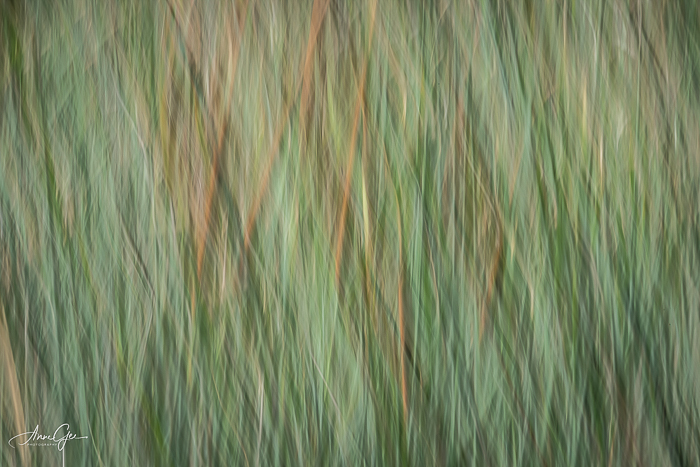
Do you like getting creative? Let’s fill the frame with an abstract! One is of cattails and the other a Ferris wheel. Both were taken with intentional camera movement (ICM).
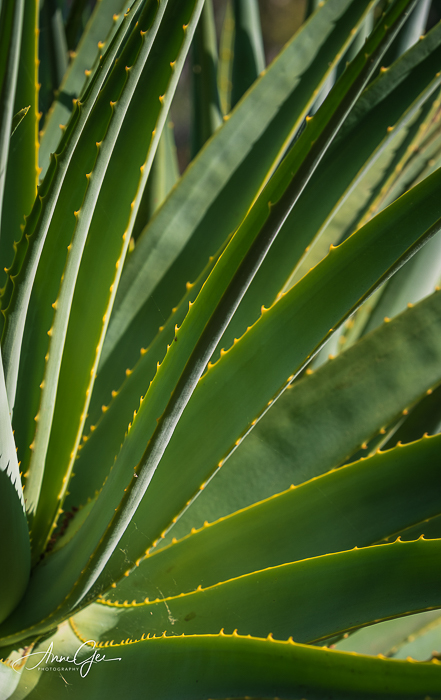
Spilling off the frame. Most of my images in this post extend beyond the frame, meaning their stories continue beyond the confines of the image boundaries.  The lotus and cactus are continued in the viewer’s imagination.

We’ve reached the bottom of my rabbit hole. Let’s climb back out so you can find your images that fill the frame. Remembering that photography is subjective, I’m looking forward to seeing your imaginative and creative responses. Anything goes! When you respond remember to link to this post and use the Lens-Artists tag.

Thank you, Donna, for getting us in the mood with her asymmetry challenge last week. We’ve been having a lot of fun, haven’t we! Next week James of Jazzibee will guest host and present our next challenge. Be sure to look for his post.

If you would like to participate weekly in our Lens-Artists Challenge, click here for more info. 

Street Photography?: The Fountains

I love street photography, but I’m finding out that I lack patience and I’m too timid to take some candid shots. If you ask them if you can take their picture, then they pose. Marlene and I went to The Fountains, an outdoor shopping center in Roseville, recently to do street photography. One, the stores were just opening and there weren’t many people. Two, At its best, this center is a leisurely shopping center–not bustling.

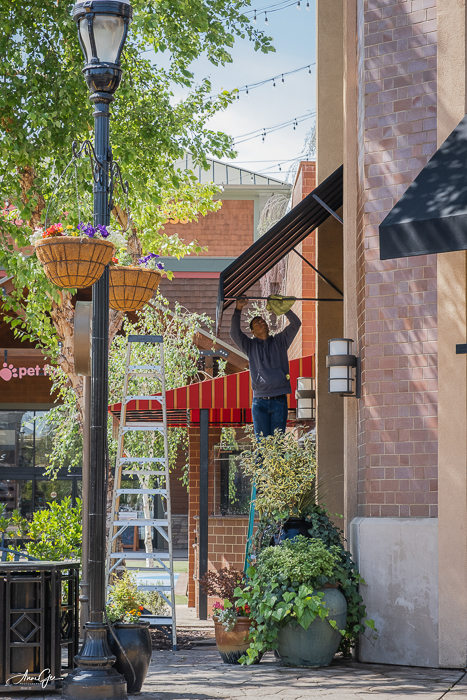
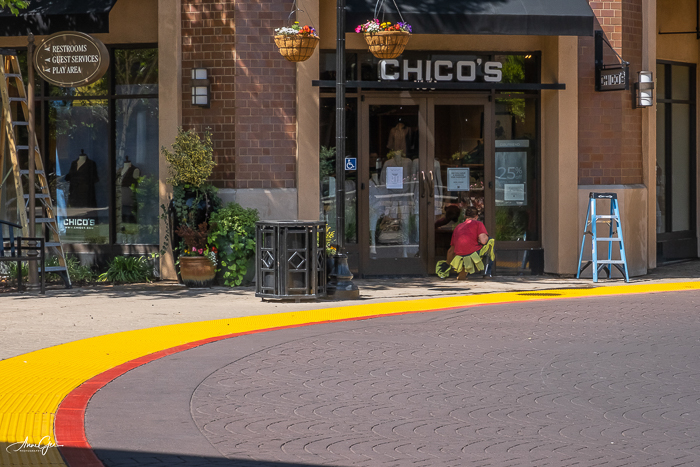
Any way, I was able to get some window cleaners on the job.

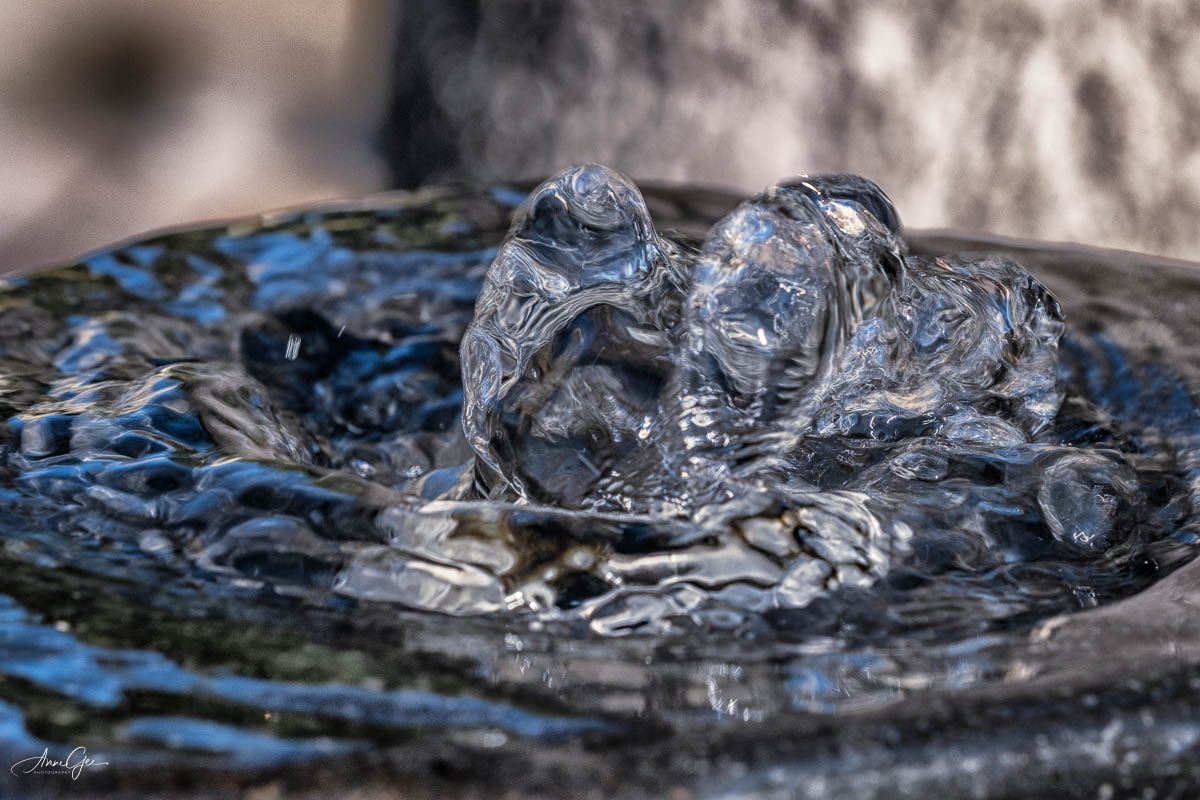
This is the fountain in the middle of the shopping center. At a peak shopping time, people usually sit around with their children or cell phones! At prime time, It’s jets propel water synchronized to music. Of course we were too early for that.

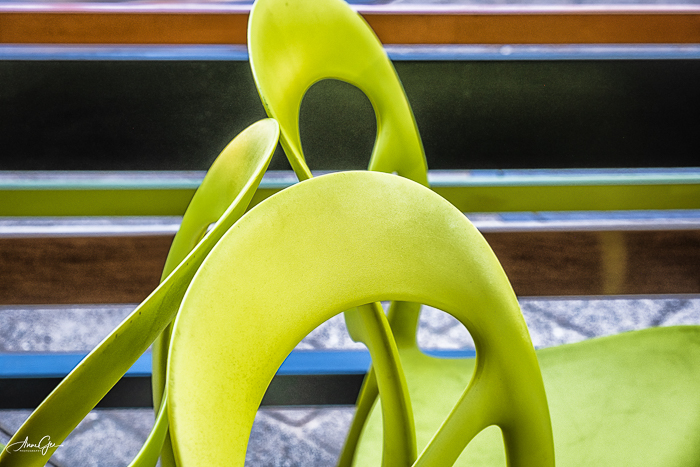
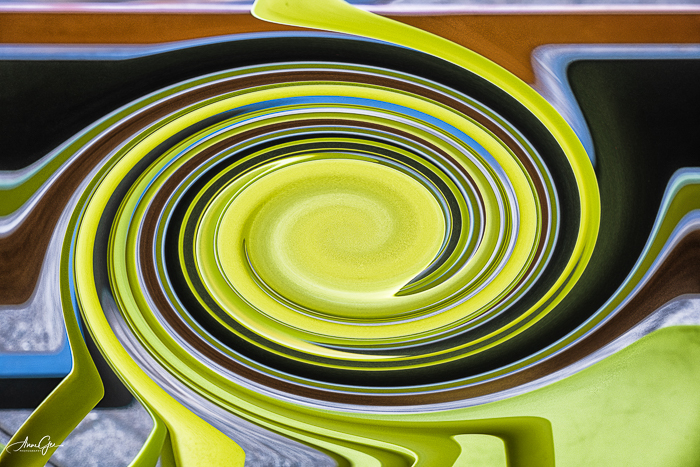
I did have some fun with chairs. First are the chairs as the were and second are the chairs with a Photoshop twirl filter. Which do you like better?

I took some other fun photos.

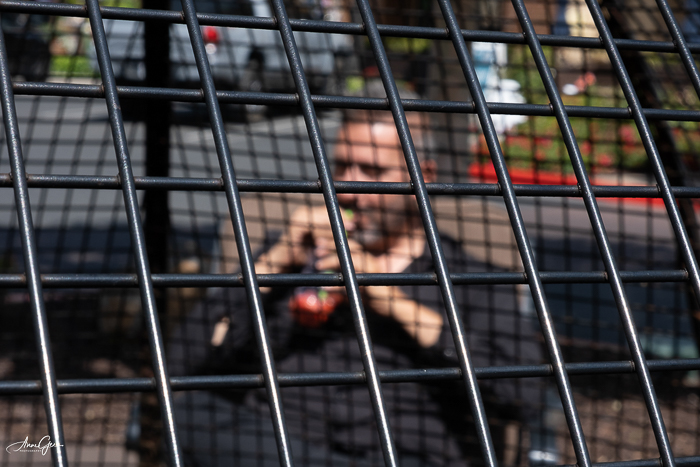
I tried to photograph this guy through a fire enclosure, but he saw me and offered to have me take his picture. Marlene and I talked with him and found out that he has terminal cancer. Marlene offered to take his picture with his cell phone, and he allowed it.

So this was my try at street photography. Not that successful, but I had a good time. Next time we’ll have to go into Sacramento City, on a Sunday so we can park, later in the day, find a busy area and wait for people to walk by. Oh, yes, I’ll find some patience too.
Lens Artists Challenge #199: Mechanical/Industrial

When I first read this week’s challenge from John, Journeys with Johnbo, I immediately thought of the Folsom Powerhouse State Historic Park in Folsom. It wasn’t our destination, but we came upon it while visiting the Old Town of Folsom. And just our luck, the docent was on his way down to open the facility.
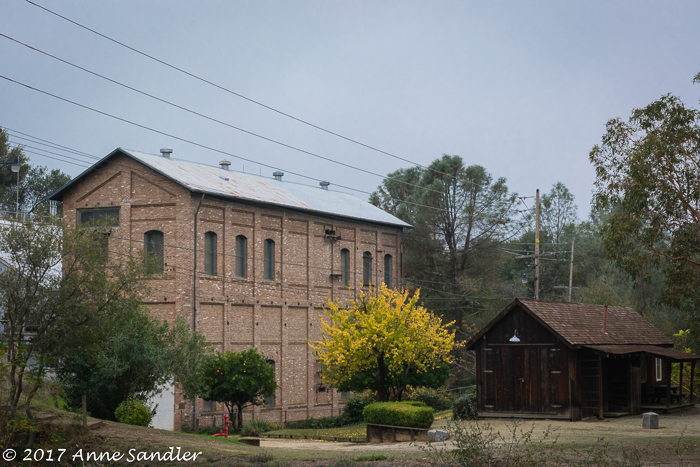
The Powerhouse is located on the American River. Here’s how it looks on the outside.

Before I take you inside, please read this brief summary of the Powerhouse history from our favorite online encyclopedia–Wikipedia. It says it better than I can.

Folsom Powerhouse State Historic Park is a historical site preserving an 1895 alternating current (AC) hydroelectric power station—one of the first in the United States.

Before the Folsom powerhouse was built nearly all electric power houses were using direct current (DC) generators powered by steam engines located within a very few miles of where the power was needed. The use of rushing water to generate hydroelectric power and then transmitting it long distances to where it could be used was not initially economically feasible as long as the electricity generated was low-voltage direct current. Once it was invented, AC power made it feasible to convert the electrical power to high voltage by using the newly invented transformers and to then economically transmit the power long distances to where it was needed. Lower voltage electrical power, which is much easier and safer to use, could be easily gotten by using transformers to convert the high voltage power to lower voltages near where it was being used. DC power cannot use a transformer to change its voltage. The Folsom Powerhouse, using part of the American River‘s rushing water to power its turbines connected to newly invented AC generators, generated three phase 60 cycle AC electricity (the same that’s used today in the United States) that was boosted by newly invented transformers from 800 volts as generated to 11,000 volts and transmitted to Sacramento over a 22 mi (35 km)-long distribution line, one of the longest electrical distribution lines in the United States at the time.”

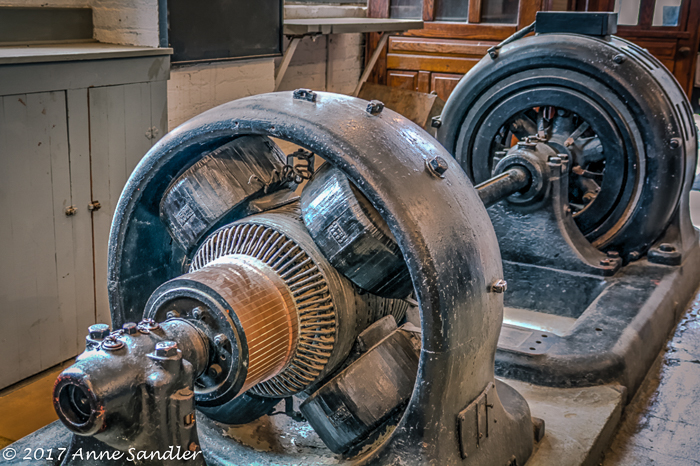
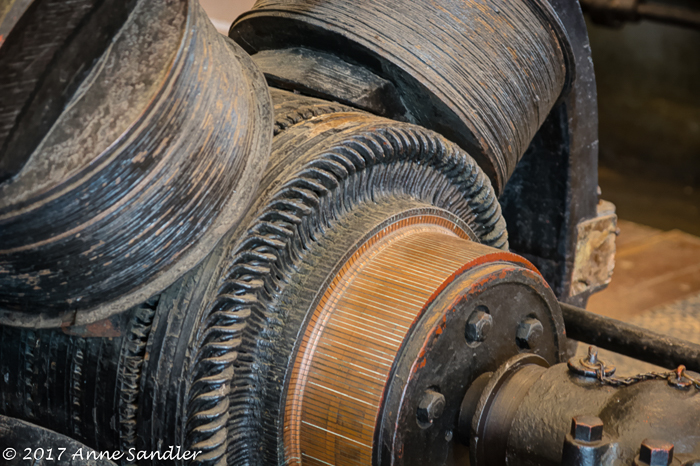
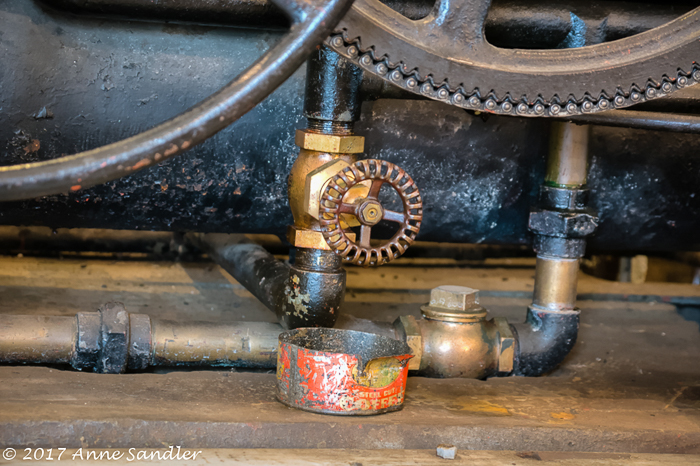
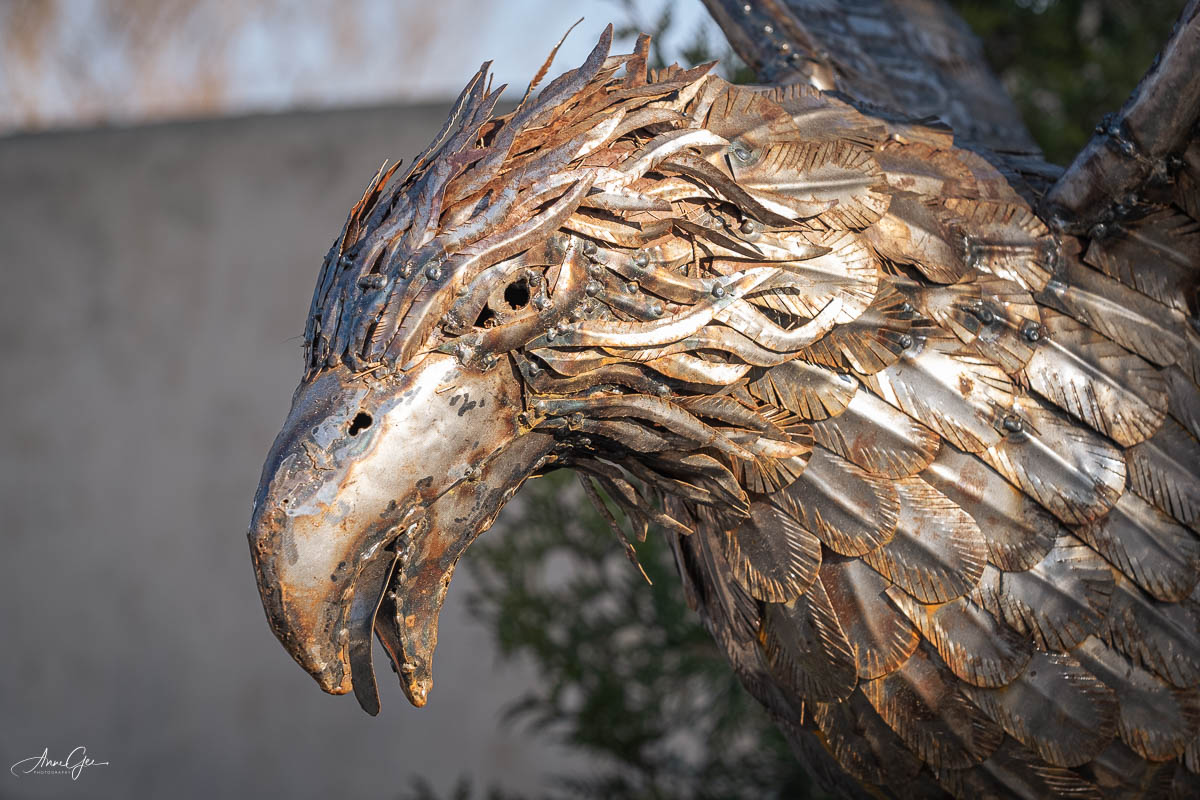
Leave it to me to photograph close ups of wheels and gears once inside. This is just part of my fun.

Now for the rest of the inside. I wish I understood more about the use of all the equipment. If you want, you can read more about it here.

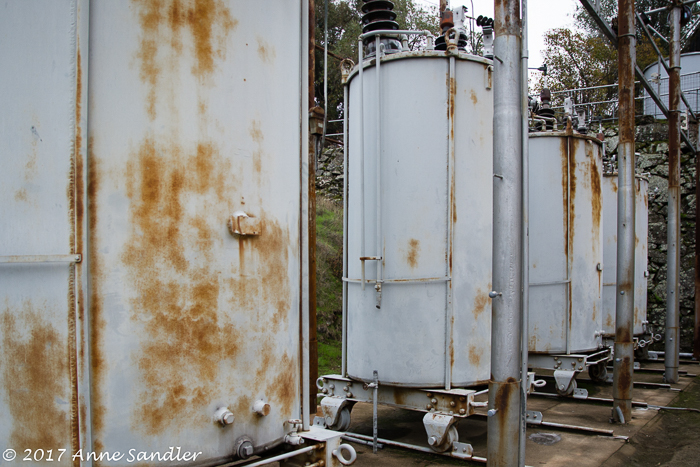
Let’s go back outside for the final photograph. Here you can see the transformers that sent electricity all the way to Sacramento.

Thank you John for giving us such an interesting topic. I’ve already read some of the replies and have been captivated. When you post your reply, remember to link to John’s original post and use the Lens Artists tag. Next week Next week, it’s Amy’s turn to host our challenge, so be sure to visit her site. If you’d like to join in our weekly challenges just click here.

Lens-Artists Challenge #137: Soft

When I hear the word “soft” in photography terms, right away my mind goes to a beautiful bokeh background. This week’s challenge from Ann Christine is on things soft. She gave many examples on how we can interpret this challenge, but I’ll stick with the pleasing muted backgrounds.

Flowers with a bokeh background was the first type of shooting I wanted to learn when I started photography.

But then I started thinking that animals can also have a bokeh background too.

Let’s see what else I can find.

There are some very small daffodils outside my front door. If it wasn’t so windy, I’d go out and shoot them for inclusion in this post. Thank you Ann Christine!

Lens-Artists Challenge #130: It’s a Small World

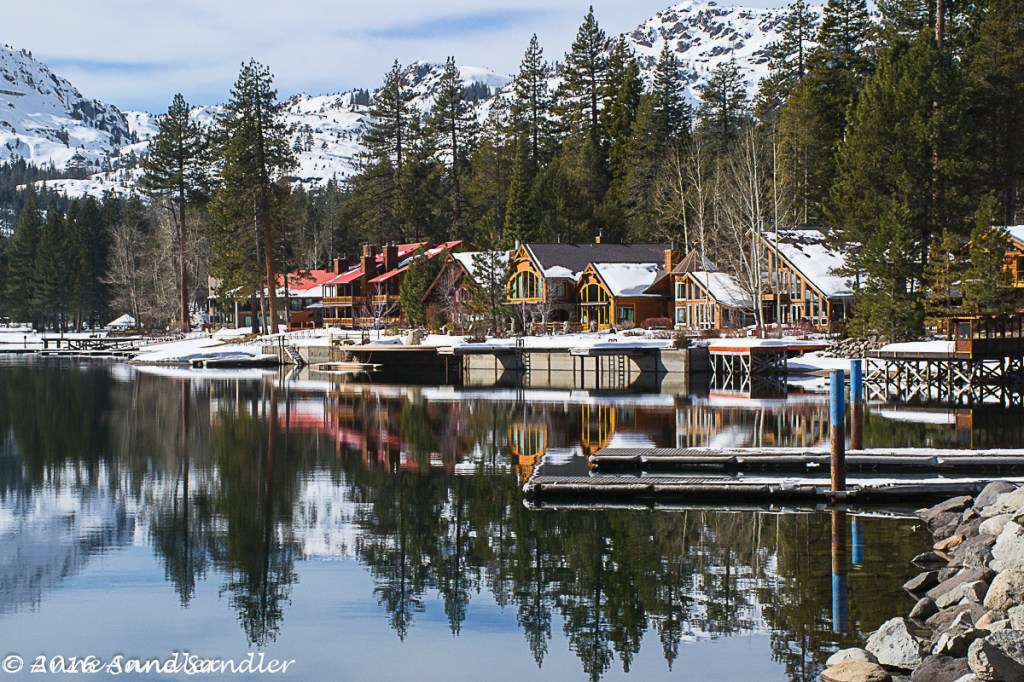
Think big! Don’t sweat the small stuff! Did you want to super-size that? In today’s world, we are taught to think BIG. We go for the big SUV, the big sale and the big burger. In photography, we learn to shoot large landscapes with a wide-angle lens. 

Donner Lake in Winter

But what about thinking small? Let’s talk about macro photography.

What is macro photography? What is micro photography? Are they different from close-up photography? Have I confused you? I’ll give you a hint, two are the same and one is different. Let’s delve into the subject.

Close-up photography takes a subject and zooms in on it. Usually the subject is small, like a plant or an insect, but it could also mean getting close to someone’s eye or face as a subject. The picture is taken with any lens. I’ve taken close-ups with a nifty fifty on a crop sensor camera.

A close-up image taken with an 18-200 mm lens, shot at F/5.6.

Typically, these types of images fill the frame. However, I’ve put flowers or part of flowers off to the side. Shooting with a 200- or 300-mm lens can give you almost macro quality.

This flower was shot at 200 mm at F/5.6.

Macro photography refers to a picture taken with a dedicated macro lens yielding a magnification ratio of 1:1. Meaning, the image depicted on your camera’s sensor is in its actual size. When printed, the subject appears life-sized. This type of photography is used especially when we shoot something exceedingly small or want to capture an extremely small part of it.

Hint: If you want just part of a subject in focus, use a lower F stop (meaning F/number) to get the entire macro subject in focus, use a higher F stop.

The praying mantis in this image appears life-sized as does the part of the flower it’s feeding on. It was shot with a 105 mm macro lens at F/16.

The leaf in this image was shot with the same macro lens, but at F/2.8 creating a more shallow depth of field.

Micro photography is the same as macro photography. Camera manufacturers use the terms interchangeably. You might say that a macro lens takes a picture of a micro subject! I borrowed that last phrase!

One big difference between close-up and macro shooting is breeze. For close-ups you can shoot in a slight breeze because the regular lens isn’t as sensitive as a macro lens. When shooting with a macro lens, any movement in the subject will result in blur. Often, I’ll just take my 55-200 mm lens out when there’s a slight breeze. I can still get nice close-ups.

Oh, yes, everyone says you need a tripod. Confession, I’ve never used one for macro. In fact, I hardly use one at all. However, you will need a steady hand and fast shutter speed.

Now we’ve covered the macro, micro and close-up differences, and you are wanting a macro lens, let’s talk about options. Macro lenses are expensive but there are less expensive alternatives. Extension tubes or reverse ring adaptors to turn your regular lens around are much less expensive options. Personally, I decided against either option and bought a used macro lens for my Nikon D7100. When buying used, be careful. Buy from a store that will let you return it within 90 days if not satisfied. Also purchase one that will give you a 1:1 ratio.

For my Fujifilm camera, I treated myself to a new macro lens, knowing I would use it a lot. It’s a prime 80 mm but still shoots at a 1:1 ratio.

So, which two are the same and the other different? The answer: macro and micro photography are the same and close-up photography is different!

This week’s challenge is to take your camera for a walk around your yard or home and shoot some close-up or macro shots. Too cold, too wet, too busy? Feel free to choose some images from your archives. Be sure to link your response to my original post, and to use the Lens-Artists TAG to help us find you. I’m looking forward to seeing what you come up with.

Thank you Tina, Amy, Ann Christine and Patti for this amazing guest host opportunity!