Did someone mention…Knight’s Landing, California?

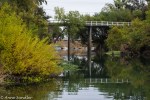
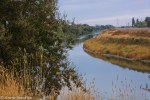
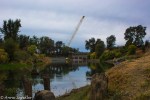
Yes, someone did mention that small town near the Sacramento River, and, of course, we had to go. We had no preconception regarding Knight’s Landing. Greg did say that there was really nothing there, but he took us anyway. He was almost correct–there was an old trestle foundation left from the old railroad days, and a quirky bar and grill.

Knight’s Landing is another census-designated place in Yolo County. Founded in 1843 by William Knight a doctor from Baltimore Maryland. it’s located on the Sacramento River in the northeastern portion of the county. In its early days it was a steamboat landing and point of communication between people east and west of the river.

Knights Landing was founded in 1843, by Dr. William Knight, a practicing physician from Baltimore, Maryland. On March 25, 1890, the Knight’s Landing branch of the Southern Pacific Railroad was completed and ready for business, and later the completion of the bridge across the river added immensely to the prosperity of the town. Today empty tracks and the remnants of the railroad trestle on the river are the only reminders of this town’s glory days.

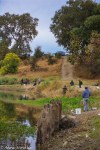
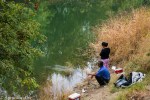
Leaving the beauty of the river behind, we went to Stingrayz Beach Boardwalk Marina. Well, it sounds fancy doesn’t it? It wasn’t, but it was fun. I understand that the joint jumps on the weekend with music and party goers. You’ll see what I mean when you look at the images.

We did stop in Woodland on our way home, but I’ll show you those in another post about the Woodland Opera House. Meanwhile visit Knights Landing through my camera lens. In my next post you can experience Stingrayz.

We follow no map to reach our destination: Apple Hill

Tuesdays with seniors is fun because while we have a destination in mind, with Greg as our guide, we take back roads to get there. And, with photographers, you just have to stop and take photographs as you drive along. The joke is that it takes us twice as long to get anywhere!

The trip up to Apple Hill was no exception. We detoured to visit the American River and the Sailor Bar boat launch. The American and Sacramento rivers wrap around Sacramento and outlying communities. That’s why I love this area. It was amazing that we drove, more or less, straight to Apple Hill after leaving Sailor Bar.

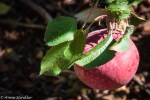
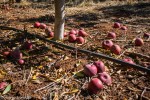
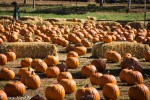
Apple Hill is a seasonal treat where growers have stands, activities for kids, crafting booths and more. You can’t leave the area without eating something made from apples. You can get anything apple. I enjoyed dipping my apple slices in caramel. Yum! Oh, there’s another favorite of mine–kettle corn. Richard is still enjoying his apple pie (I froze slices). And, lastly, there is wine tasting.

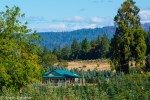
But the real attraction for a photographer is the countryside and nearby towns. Take a look!

A photo a day keeps Anne busy: images here and there!

I’ve learned a lot this year. More than I did in my first two years of shooting. Why did it take me so long? I know the answer. I psyched myself into believing that learning was too difficult. Why did I do that?

I had just closed down my business of writing marketing text and articles, and coaching business owners who wanted to sell their business by speaking engagements. That I knew well and had expertise in. But photography?

When I bought my D3100 and read the manual (I always read manuals!), I was amazed at how complicated digital photography seemed to be. And, that’s how I started out. From there I took baby steps with urging from photographers I met on meetups. Some even challenged me. I took on Jayne’s HDR challenge and was amazed at how easy the software was to use. Why did I wait so long. Shooting RAW instead of JPEG–that took 1 1/2 years! Mary pushed me towards the manual setting. I’ve been shooting manual since January 1st. I procrastinated because of fear. It’s easy and gives you the most control.

Taking on the 365 challenge has helped propel me forward. I now help new photographers on occasion and have started a photography club within Toastmasters International, District 39. Next year, I want to tackle processing. I do minimal editing in Lightroom, and want to do more.

I love photography, and it won’t take me as long to move forward. Here are some reasons I love it so much.

Da Bear: Lake Tahoe, California

It took 30 years of camping before Richard and I saw a bear in the wild. And, it took our first day in Lake Tahoe for us to see one fishing! Yes, I did get pictures, but with just an 18 – 140 mm lens, I wasn’t too happy with the results. But, it was exciting.

Marlene and I were there because another photo buddy Jayne had reserved a 3-bedroom time share condo and invited members of the photography community to join her. Unfortunately, Marlene and I were the only ones who were able to take advantage of her generosity. I remember last year I couldn’t go. We were to be there three nights.  However our trip was caught short a day.

The bear and Taylor Creek was our first stop during our visit. We got there late in the afternoon and walked the path to the Profile Chamber where visitors could view salmon. However, once we got there we had 5 minutes before closing and there weren’t many salmon. It was on our way back to the car that we saw the bear. It was a good thing that it was concentrating on fishing and didn’t care that a crowd of people were close and shooting pictures.

In this post, I’ll show you the bear, the rest of Taylor Creek and a cloudless sunset at Nevada Beach. It’s just amazing to me that you wait 30 years to sight a bear and within hours at Tahoe, you sight one.

Home, home, on the ranch: practice again at Gibson Ranch

It’s one of my favorite places to practice. I’ve learned how to shoot sunsets, sunbursts, animals, water fowl, events and buildings there. And, best of all it’s close to home! Gibson Ranch is a park where people board and care for their horses. They also train them there. It’s a place to hold large events like the Civil War Re-enactment. Most of all, it’s peaceful.

When you visit you may see children feeding the ducks and geese, or a father and son fishing. With two playgrounds, it’s also a wonderful place for a family to picnic and play.

For me, it’s a great place to practice photography. On a recent visit, that’s what Marlene and I did. We walked through the horse grounds, caught peacocks high and low with our cameras and tried to have as much patience as the egret had as it was trying to fish.

Here’s our visit to Gibson Ranch and my practice session.

Taking a different course: Plymouth and Fiddletown, California, part 2

Oh, sorry to leave you right in the middle of Fiddletown, (Where we left off in my last post.) but we will leave once I tell you how it got its name.

Founded in 1849, the town mainly served as a trading camp for the many mines in the area. A popular mining technique, placer mining, was heavily dependent on water. Dry Creek, the local water source, ran dry in the summer months, meaning the miners couldn’t work. It is said that the miners would fiddle around, and the town became known as Fiddletown. Not happy with his town’s name, a local resident lobbied to have the name changed to Oleta (his daughter’s name). This name stood until his death in 1932 when the name Fiddletown was restored.

Embracing the name, residents are not idle. They have fund raisers to support renovations for historic landmark buildings, a Living History Day and a Fiddlers Jam. I’m hoping that some day they will put in a proper public restroom!

Now we will leave Fiddletown and head down to D-Agoustini Reservoir enjoy your journey!

Taking a different course: Plymouth and Fiddletown, California

It was Tuesday with seniors. I was still hobbling. it was the three of us me, Marlene and Greg. But, we took a different course into Plymouth and Fiddletown.

I’ve been to Plymouth, but not to photograph the sights. We used to square dance and went to a yearly festival there. And, just the name Fiddletown was attraction enough for me. So off we went, with Greg taking us down every back road he knew! I was still in the back seat with my foot up.

Plymouth is a city in Amador County, and the 2010 census shows a population of 1,005. This is a very small town with the downtown area maybe three blocks long. It looks like they are trying to create an upscale yet old look with new construction on the main street.

This is in contrast to Fiddletown where the main drag shows buildings empty and almost falling down. A census designated community in Amador County, Fiddletown’s population was 235 as of the 2010 census. It  is registered as a California Historical Landmark and is listed in the National Register of Historic Places. But, it has a charm to it.

Our guide, Greg, also took us to D-Agonstini Reservoir which I thought was a large pond! And we had crossed the county line into El Dorado County. I’m sure I mentioned in a previous post that you never know where you’ll end up when Greg is driving!

So that’s where our course took us last week. See for yourself in this two-part post.

A quick trip before being grounded, part 2: the California State Capitol building

It was desperation that pushed me out the door on Labor Day. I knew I wouldn’t be able to shoot for at least a week after foot surgery. Laura and I visited downtown Sacramento and the Capitol building during the morning. I knew enough not to be out all day because surgery was early the next morning.

In my last post, I showed you the various statues, sculptures and street life around the Capitol. We shot outside for about two hours. But, it was getting late in the morning and tourists were walking around–a great time to go indoors and see our State Capitol. Part of the first floor is a museum, one wall gives a history of all the California counties and houses the Governor’s office. It’s a beautiful building with an amazing rotunda.

I was amazed it was open on a holiday and very glad I felt desperate enough to want to get out and shoot.

Here’s a glimpse of the California State Capitol.

Lesson learned; shooting with a tripod: Empire Mine State Historic Park, Grass Valley, California

I told you that I learn from my mistakes, and for this outing, I remembered my Tripod. It’s a good thing I did, because it came in handy at the Empire Mine State Historic Park in Grass Valley. The park was begging to be shot in HDR which added so much depth and character to the images.

As usual on Tuesdays, our guide and driver Greg took us, me and Linda, the back way to the Park, stopping along the way to discover future shoots, do some actual photography and eat. That is how we ended up in Wheatland, the first stop on our journey. This is a very small town. I put the “very” before small because that’s how small it is–at least to our photographic eyes. The town, in Yuba County, actually has a population of 3,456 as of the 2010 census.

We were going to Rough and Ready but never made it because it was getting late and we wanted to get to the Mine. Oh yes, we made a couple more stops along the way. The Empire Mine was founded in 1850 and operated until 1956. The William Bourn family maintained control of the mine and lived there until 1929 when it was sold to Newmont Mining. In 1975 it was purchased by the State who then created the Historic Park.

We got there late afternoon, quickly going to the mine area. The grounds are separated into the mine area and living quarters consisting of a beautiful home and gardens. We shot until we were asked to leave. It seems they close the Mine at 5 p.m. When we left, the ranger reminded us that we were there almost two hours which should have been enough time to see the mine, and I had to explain that photographers take more time than most people. I don’t think she was sympathetic; she just wanted to go home!

Oh, another lesson learned! Check out the hours before we leave home! Yes, we’ll have to do that because we will be returning.

Before and After: The journey to Locke in the Sacramento Delta

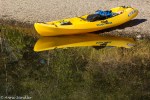
Part of the fun of going somewhere is the before you get there and after you’ve left! Have I confused you? Well, we don’t go straight to any place. We stop along the way, get sidetracked and look for unique things to shoot. This happened on the way to Locke in the Sacramento Delta.

The Sacramento Delta is an expansive inland river delta and estuary in Northern California and is  an important habitat for migratory waterfowl and more than a hundred species of fish. It is also farmland, a popular recreation area and a source of drinking water for two-thirds of California’s population.

We first stopped at the small Freeport Marina. It was there that I realized I left my tripod home! Greg offered to share his with me, but I knew he used his most of the time and declined his generous offer. So, it was a handheld day for me. Lesson learned! Seems I’m always learning. Didn’t I say in my last post that I learn a lot by making mistakes?

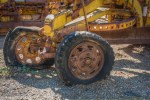
Next we found a Halloween surprise, an old truck and a bridge to shoot. Then we got to Locke. You can see that our journeys seldom follow a straight path, and that’s the fun of a photo outing.

In this post you can see our before finds. You’ll have to wait for the next post to see Locke and what happened on the way home–the “after” part of our trip.